
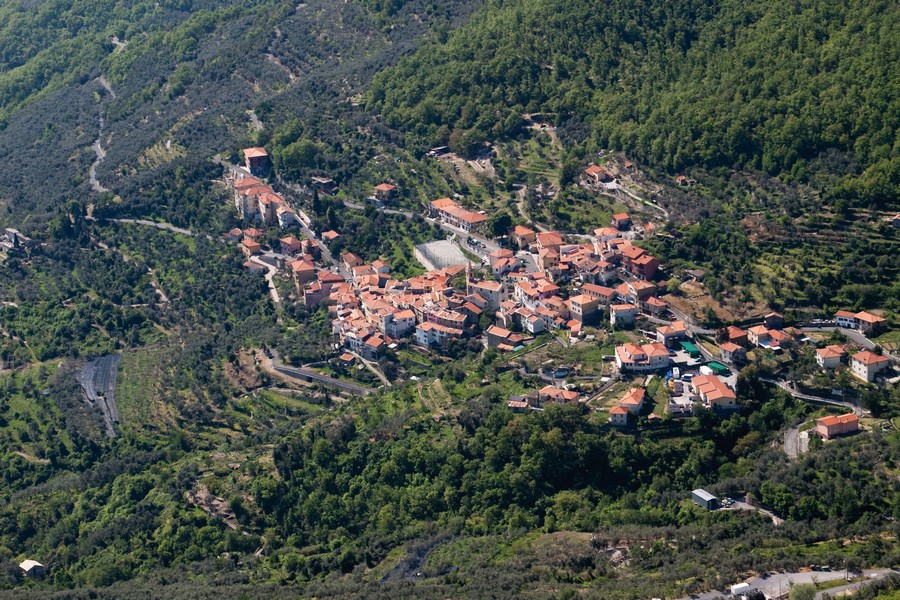
Altitude: 360 m a.s.l.
Area: 5 sq km
Distance from Imperia: 19 km
Inhabitants: in 1881: 323 - in 2017: 270
Patron Saint Day: September 29th - San Michele Arcangelo
Information: Municipality phone 0183 55050
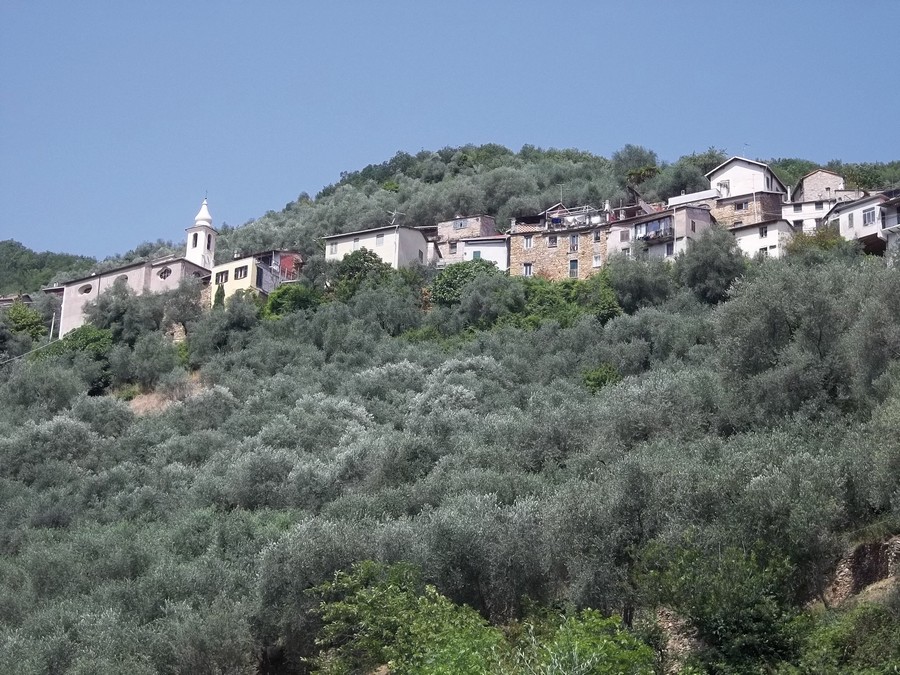
Caravonica (the name derives from the "caravan stop" of which the village was the seat, an obligatory stop of the mercantile traffic between Liguria and Piedmont through Colle San Bartolomeo above, before the road route was changed) is a medieval center already fief and residence of the Counts of Ventimiglia, whose history is identified with that of the other villages of the Maro valley.
Visit of the town
Shortly before the inhabited area, on the right, at the crossroads marked by an iron cross, branches off the descent that leads you near the graveyard to the ruins of the church of San Michele of the year 1001, of which today remain, suffocated by brambles and ivy, the apse split in two with two fluted columns inside, and a few chunks of the side walls.
Returning to the Provincial Road continue around the village and, passing - by keeping the right - the fork to Candeasco, park two hundred meters further, in the widening on the right.
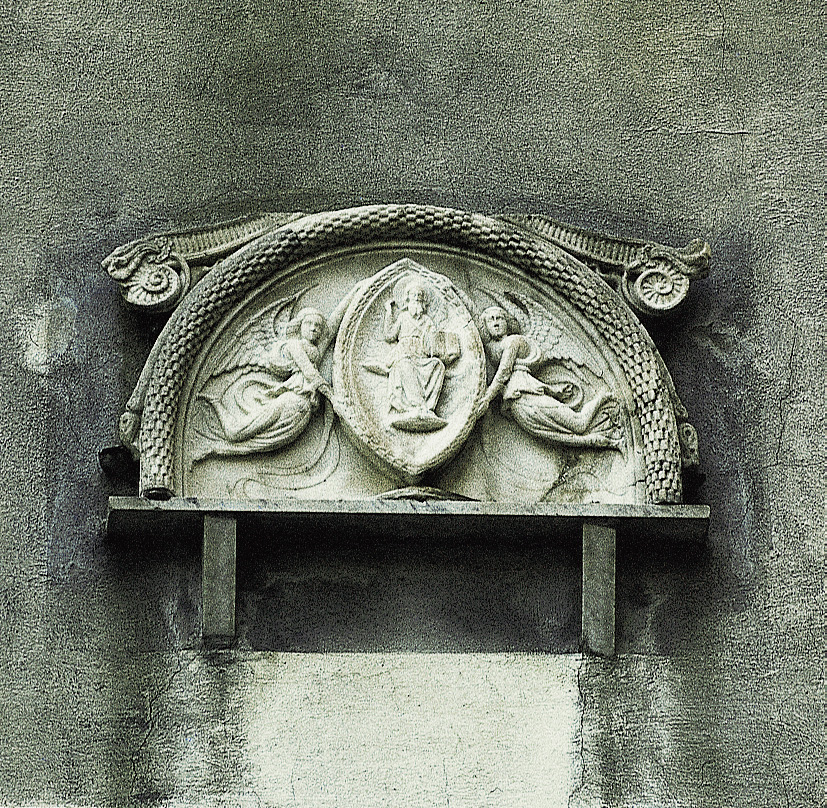
One hundred meters further, on the right descends the flight of steps that take you to the church of San Michele Arcangelo of 1670, decorated on the façade by a marble lunette with a high-relief of Saint Michael in an oval supported by angels.
The patron saint of Caravonica is San Michele, celebrated on September 29th. Linked to the Saint is the Confraternity of San Michele, whose feast is celebrated on March 25th, the day of the annunciation of the Lord. The members of the confraternity, only men, were called "fradelli" (i.e. fratelli: brothers). The procession in occasion of the day of the Patron Saint was attended in particular by these “fradelli”, who paraded with a white cloak and torches with painted handles on top of which was a cup in which a burning candle was inserted; at the end of the ritual each man who had participated received a “mica”, which was a bread with the characteristic ovoid shape slightly pointed at the ends, and a liter of wine, and had to commit himself to recite a requiem for the soul of the person who had made the donation .
Inside on the right is the sixteenth-century polyptych "Stories of the Virgin" and on the left altar the statue of St. Michael striking the horned Lucifer.
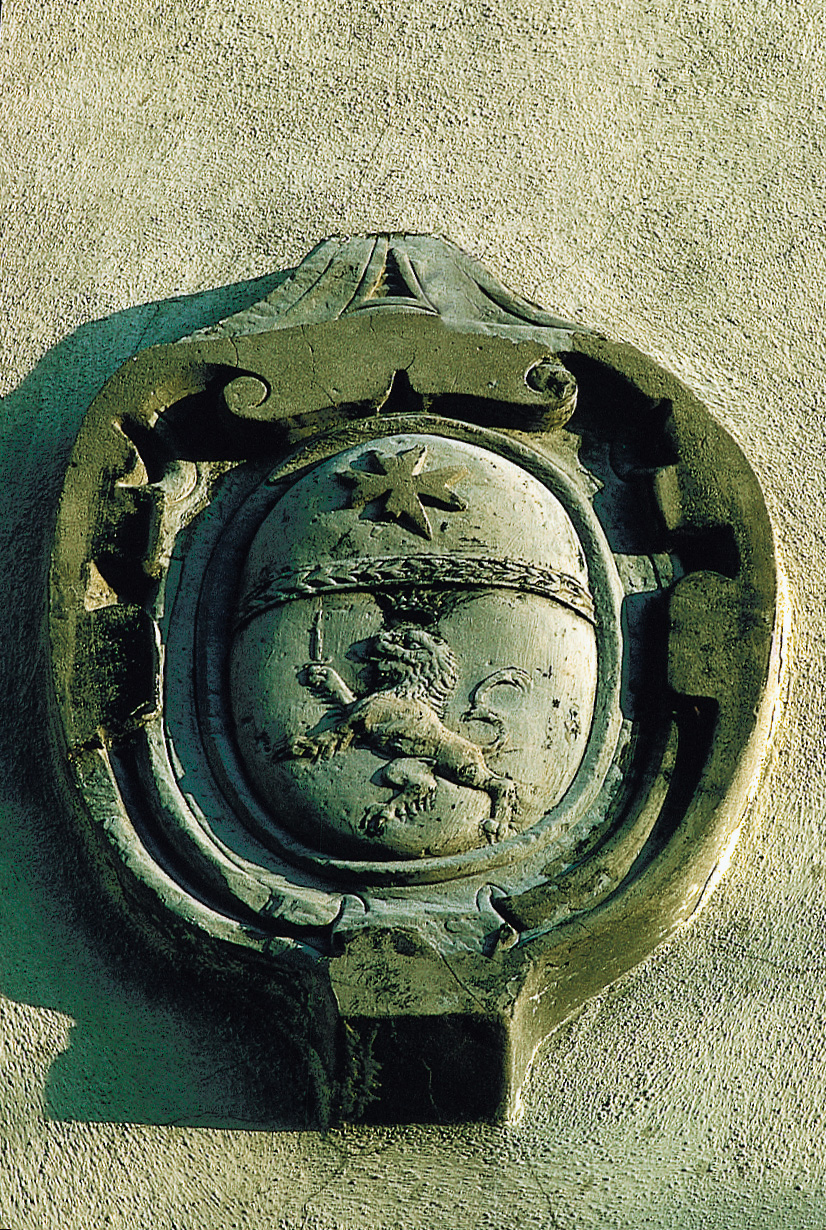
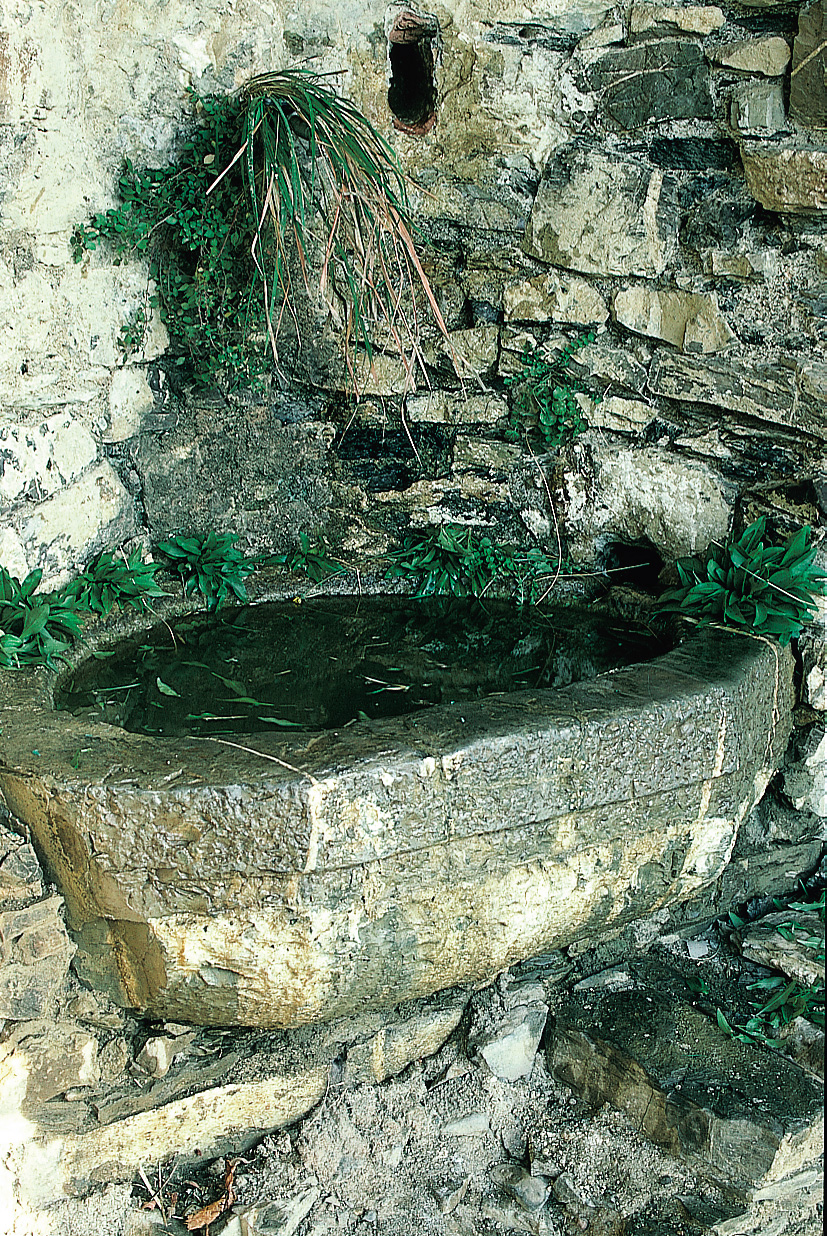
After observing in the churchyard, next to the bench, the pieces of columns of the original construction, go along the left wall of the church on which is affixed a marble plaque carved with with the Savoy rampant lion, in front of a fountain with a drinking trough.
Continuing, you’ll arrive at the base of the bell tower, the only part left of the original seventeenth-century building, at the base of which a large stone bears the date 1622; under the nearby archivolt, going down a few steps to the right of the aedicule you can see the alleys and stone houses that characterize the village.
Back to the base of the bell tower, continue on the same level passing the beautiful black stone aedicule and the statue of San Giuseppe at the corner with Via Marchese d'Agliano, a nobleman who lived in the next block; after a few steps on this street you’ll notice, at the end of the alley on the left, a narrow little house with an archaic "ciappe" roof that connects the two opposite buildings; of this connection we will discuss in the following note.
Back to the aedicule go down the brick flight of stairs to the archivolt on the right, under which is a beautiful black stone aedicule with a plaque that reads: "O VOI CHE PASATI DE QUAVIA – SALUTATI CON PIETA' IESU MARIA" which has its history, starting from the error of the stone-cutter, who in engraving forgot the "R" of "MARIA" and then tried to remedy somehow.
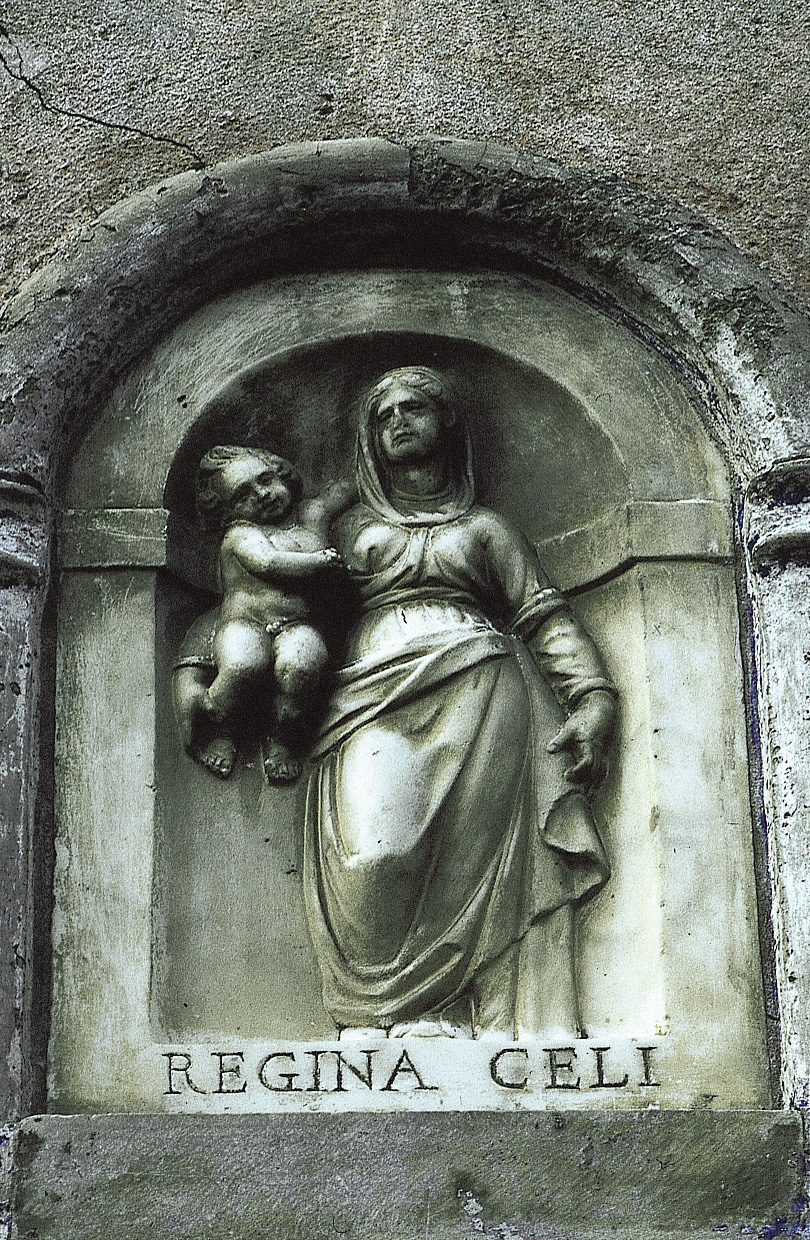
Going down the flight of steps, past the marble portal of 1622 with a Trigram and the initials R.B. of the stonecutter , you’ll find yourself on Via Oratorio, from where you’ll see on the hill in front of you the Sanctuary of Madonna delle Vigne which you will visit shortly and, a few meters to your left, the beautiful high-relief of the Virgin with Child and the inscription "Regina celi".
Take the right, reaching the vault where a plaque reminds you that the above residence of Count Bartolomeo Ottavio Tomatis, of which there is in front the beautiful round-arched portal, housed in 1706 the Holy Shroud escorted in the journey from Turin to Genoa by Vittorio Amedeo II of Savoy; the street ends with the restored house, with a small aedicule and an architrave carved with an inscription wishing peace; alongside are archaic buildings in rough stones.
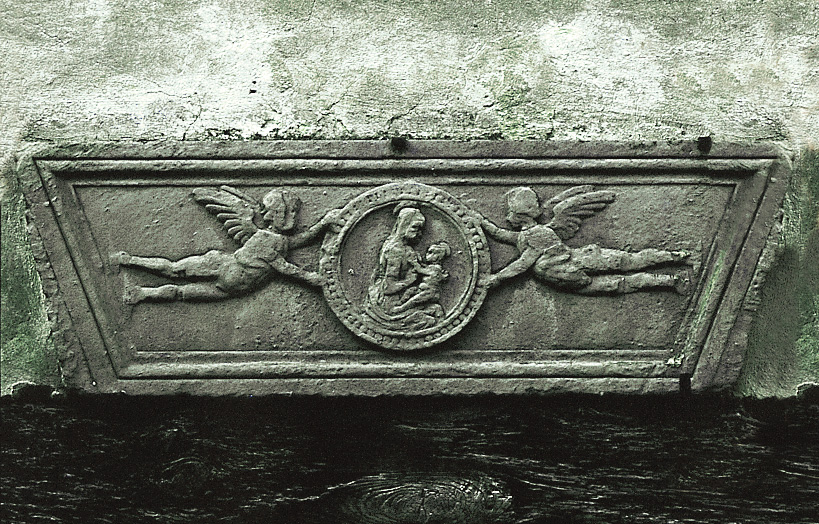
Go down to the left of the fountain and at the end of the descent proceed to the left until you reach, under the vault on the left, the side of the archaic manor house on which opens the great portal with massive Romanesque arched monoliths, with a keystone carved with a heraldic coat of arms later abraded, and a now walled up window with monolithic jambs; on the façade, above the wooden architrave of the door, there is a trapezoidal plaque carved with images -now washed out but still clearly legible- of the Virgin with Child in a tondo supported by angels.
Go back and continue along this street, and after passing the arch raise your eyes to the right to observe, affixed next to the window according to the archaic use, the “ciappa” holding up a flower vase; beyond the vault, at the bottom of the other vault on your right, next to the monolith carved as a press base, is the semicircular stone terrace that incorporates the "ciappe" perforated to hold the poles in support of the vine that offers its bunches to the first floor.
The street ends into the widening with on the left a sundial of 1816 with the motto "Mentre mi stai guardando, l'ora ti va mancando" ("while you're watching me, you are running out of time"), and just before, on the right, a beautiful stone portal with a triangular tympanum carved with an inscription of 1460.
Go back, returning on the left under the vault that leads you to the fountain from which you’ll take the right under the vault with a plaque of the Shroud; walk all along Via Oratorio until, after passing the arched stone portal on the left, you’ll reach the widening with the large wash house on the left and opposite the oratory of the Annunciation with the related fresco on the façade, from which on the left you can go back to the car.
Driving up a few hundred meters, take on the right the detour which, going straight ahead, takes you in less than a kilometer, on a paved road and then on a good dirt road, to the Sanctuary of Madonna delle Vigne erected in 1590.
On the façade, preceded by a portico with seats, is a large railing with a gate and antique latches, through which you can see the interior, full of stuccoes and Baroque decorations; on the main altar is preserved the painting of the Virgin to whom the sanctuary is entitled, surmounted more than by a prayer by a real intimation: "MOSTRA TE ESSE MATREM", says the writing, that is "Show/prove yourself to be a mother".
On the external right wall of the Sanctuary there is a large sundial of 1821 with Italic hours, large enough to be seen from the village on the opposite side of the small valley; next to the sanctuary there is a small house whose ground floor consists of a large archivolt that houses a fountain with a beautiful monolithic hexagonal basin.
Back to the Provincial Road, continue up between the woods and upon reaching the pass of Colle San Bartolomeo take the left following the road sign to Ceva; the road is dominated on the left by Monte Guardiabella (1,219 m), where opens the "Sgarbu du ventu", a large active sinkhole rich in concretions almost five hundred meters long that serves as a collector of numerous underground conduits, some of which with interesting fossil finds.
Continuing through the woods, the road intersects on the left the detour to Calderara, "the village without smokestacks" (in many houses the warm smoke of the fireplace was used to dry chestnuts); at the beginning of the village there is a suggestive fountain on the left, while at the cemetery stands the Romanesque church of San Giorgio.
From there descend again on the Provincial Road which flows into the modernized State Road 28 after this road has crossed the valley with its long viaduct, thus returning to the itinerary to Pieve di Teco that you left in San Lazzaro Reale.