
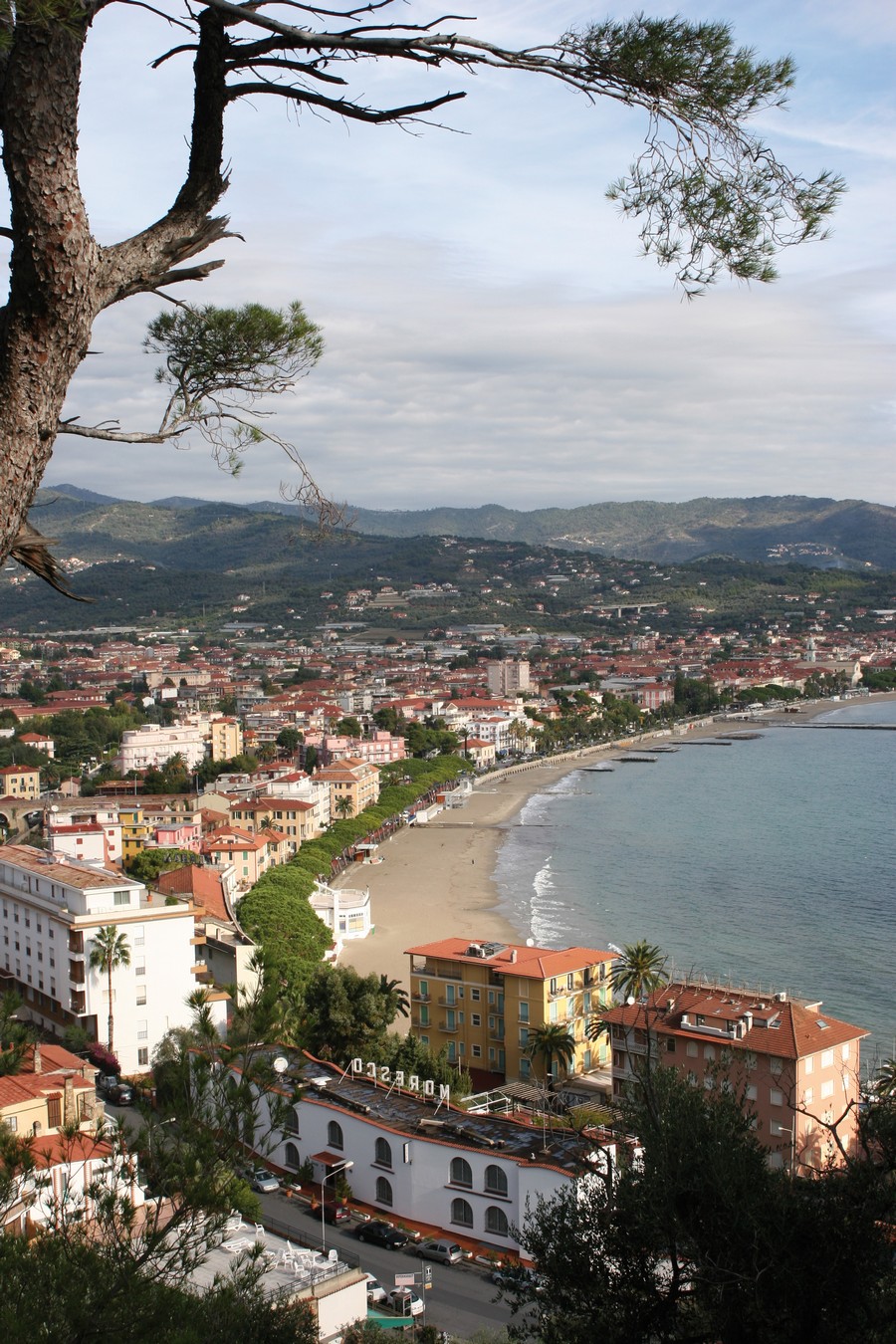
Altitude: 2 m a.s.l.
Area: 27 sq km
Distance from Imperia: 6 km
Inhabitants: in 1881: 2246 - in 2017: 5972
Patron Saint Day: July 16th - Madonna del Carmine
Information: Municipality phone 0183 490224
Inhabited since the 7th century BC by a settlement of native Ligurians witnessed by the exhibits in the local “Museo della Communitas Diani”, the area was named "Lucus Bormani" (from the name of the Ligurian god Borman venerated here) by the Romans who founded a "mansio", later integrated into the primitive fishing village.
Traces of the Roman settlement are still present.
The recurrent raids of the Saracens induced the inhabitants of Diano to abandon the plain on the sea, too exposed, and to take refuge on the most secure hill founding Diano Castello.
Fief of the Marquises of Clavesana, Diano Marina redeemed itself by electing its own consuls, to pass in 1228 under the Republic of Genoa to which it remained submitted ever since.
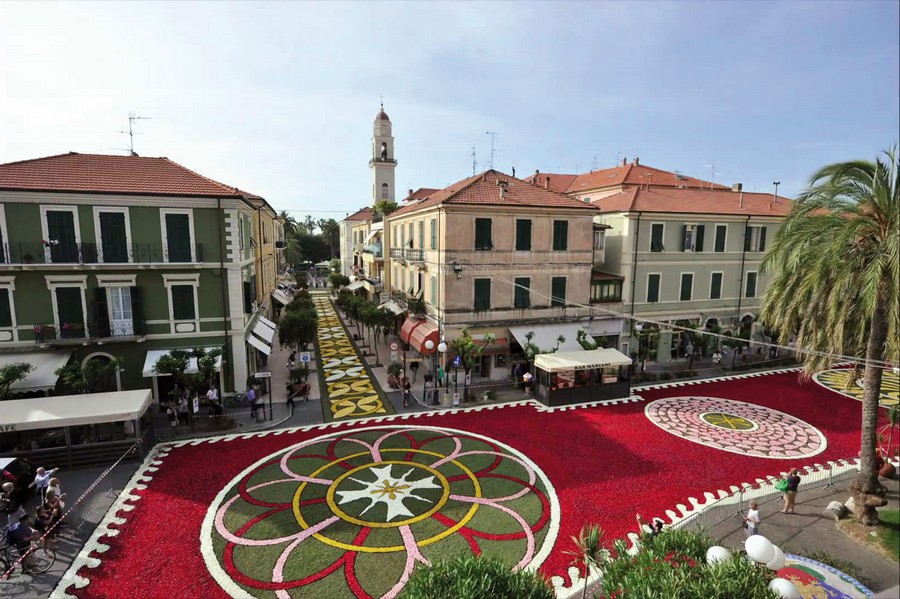
Visit of the town
Rebuilt under the guidance of the engineer Giacomo Pisani after the earthquake of 1887 that damaged it heavily, the town of Diano Marina does not preserve significant constructions of its illustrious past.
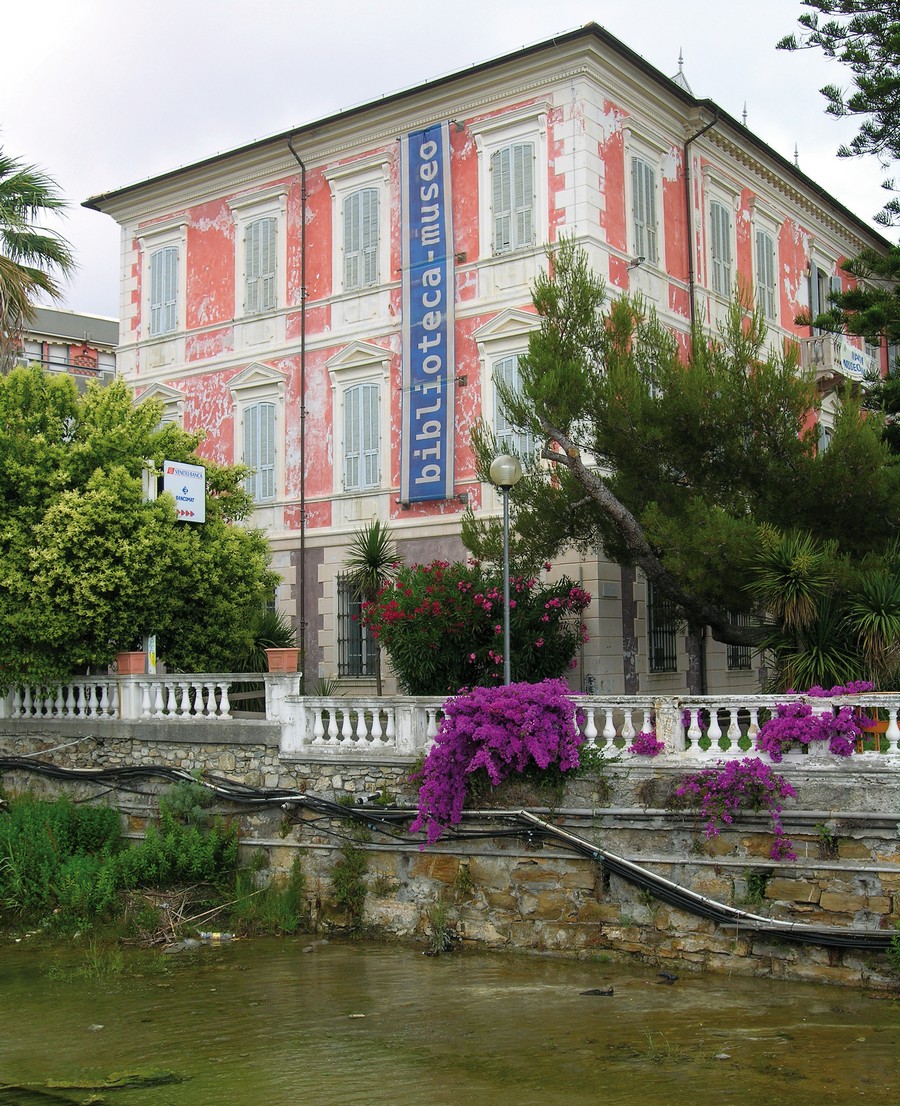
In correspondence of the public gardens in the middle of the rectilinear stretch of Via Aurelia that flanks the promenade, stands Palazzo del Parco, seat of the Library and of the Civic Museum which exhibits paleontological, Roman and Risorgimento finds.
In the museum a room is dedicated to paleontology with a collection of fossils; in the rooms reserved to archeology are exhibited finds of a settlement established prior to 500 BC, with the reconstruction of a fireplace and material from pre-Roman tombs; in another room there are finds from the Napoleonic period, and finally in the last one documents from the Risorgimento, particularly significant as they derive directly from the legacy of Andrea Rossi, the inhabitant of Diano who was a pilot of the”Expedition of the Thousand”.
If the Museum offers a significant cross-section of Diano history, the Dolium is not far behind, which is however to be found in the atrium of the modern municipal building in the central Piazza Martiri della Libertà: it has been recovered from the wreck of the Roman cargo ship that lies on the sea floor in the gulf of Diano Marina.
The “Dolia” are huge terracotta containers of rounded shape, with a diameter of almost two meters and a capacity of over three thousand liters; other oblong-shaped "containers", just as tall but with a diameter of about one meter for a capacity of one thousand two hundred liters, were on board (as well as the numerous amphorae partly recovered) inserted in the empty spaces between the larger containers to complete the stowage of the load.
Back to the car, take the first right to reach the "Prato fiorito" area where the ruins of the small church of Santi Nazario and Celso stand between the railway line and the sports field, the only Diano relic of the Romanesque period.
Returning to the Provincial Road, continue straight to the north, reaching the village of Diano Castello after a climb of two kilometers.