
Altitude: 350 m a.s.l.
Area: 10 sq km
Distance from Imperia: 15 km
Inhabitants:
- in 1881 872
- in 2017 482
Patron Saint Day: September 21st - San Matteo
Information: Municipality tel. 0183 90200
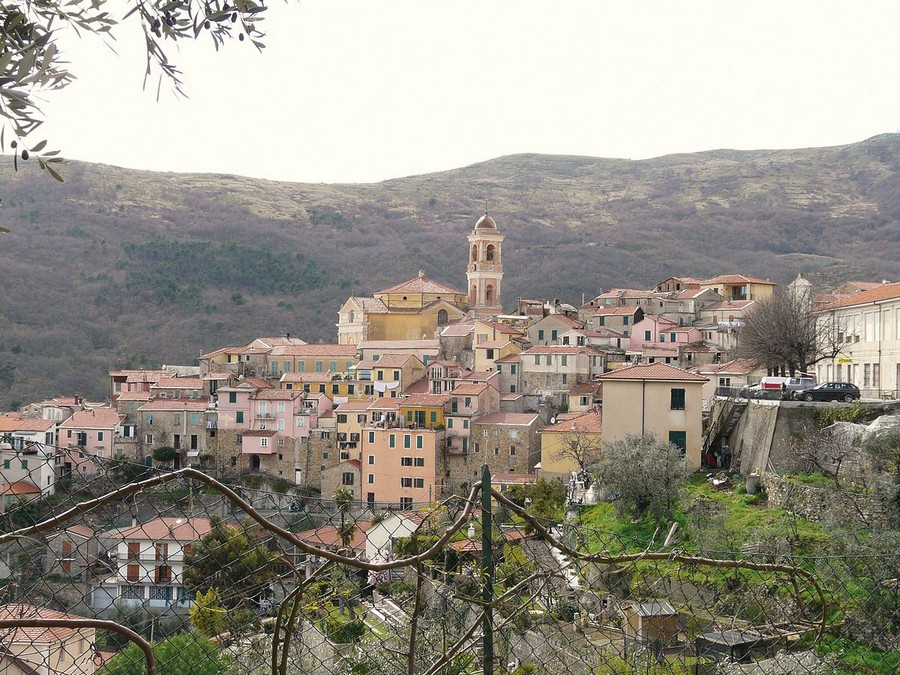
The medieval village of Pietrabruna was formerly a domain of the Lengueglias; sold in 1162 to Porto Maurizio, it became part of the Terziere of San Gregorio, thus always following the fate of Porto Maurizio.
The toponym is attested in the XII century as Petra Bruna, then in the following century as Preabruna, from which derives, due to the abbreviation and dissimilation of the “r”, the local term of Prebüna.
The term Petra, as for the town of Pietra Ligure, could indicate, in addition to the stony material that is extracted on site, also the existence of a fortified post for defensive purposes, while the Bruna epithet undoubtedly refers to the color of the stone, perhaps with implicit allusion to the dark color of the stones with which the houses of the medieval village were built.
After violently sacking Riva and San Lorenzo, the barbaresque corsairs, led by the Calabrian renegade Luca Galeni, better known as Occhialì, reached the villages of Lingueglietta, Civezza and Cipressa, which were wildly devastated.
The same sad fate would also occur to Pietrabruna in early June 1564, when Occhialì and his men, shortly before brutally sacking Civezza, Torrazza and Piani and destroying the village of Montalto di Caramagna, raged against the village of Pietrabruna and its inhabitants with unprecedented ferocity and blind violence, also capturing many unarmed people.
Visit of the town
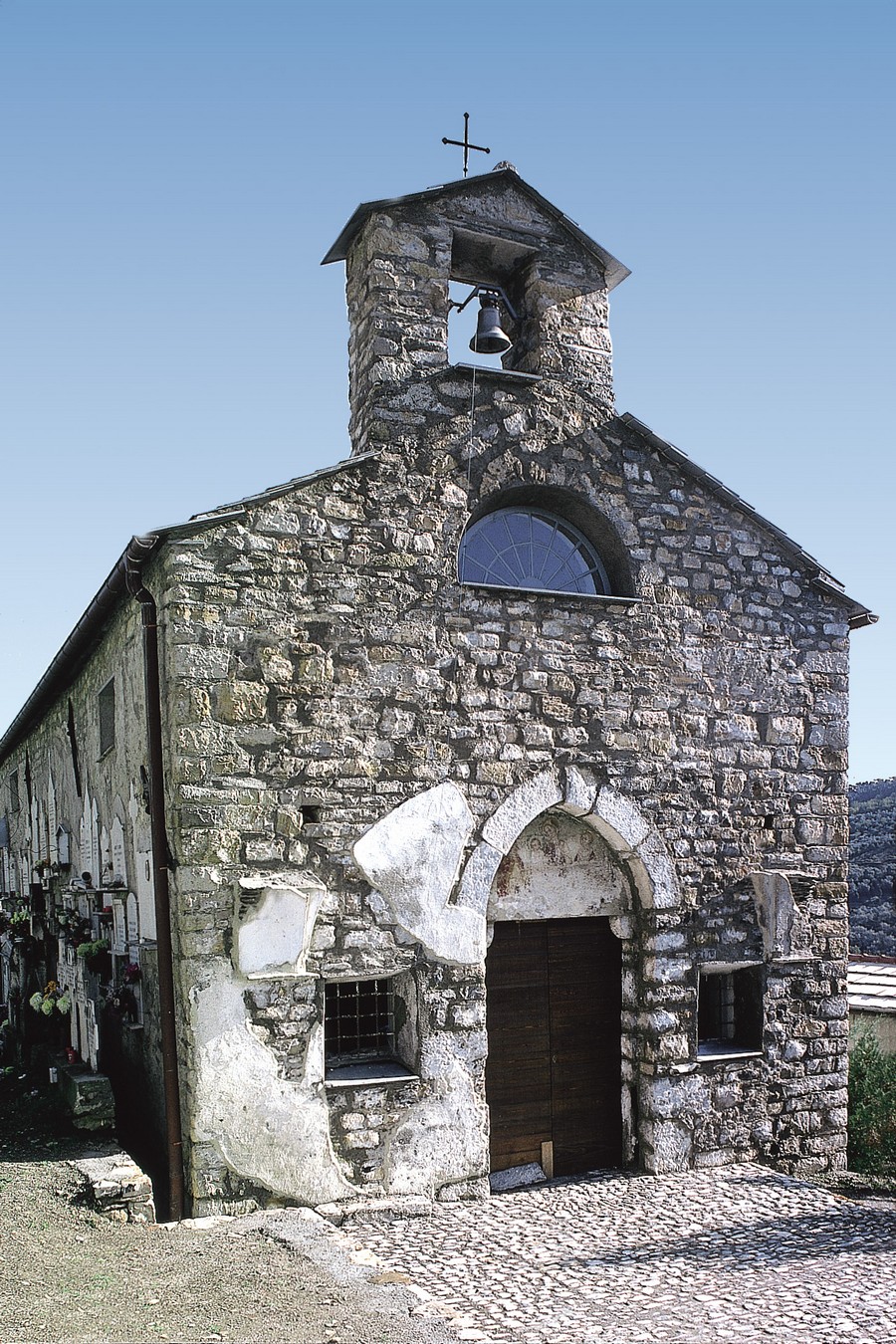
Just before arriving to the village, a sign on the left indicates the path that leads to the church of San Gregorio; ignore it and continue to take shortly afterwards, at the end of a short straight stretch of road, the paved street that descends to the left, taking you by car to the parking area of the cemetery where the building is located.
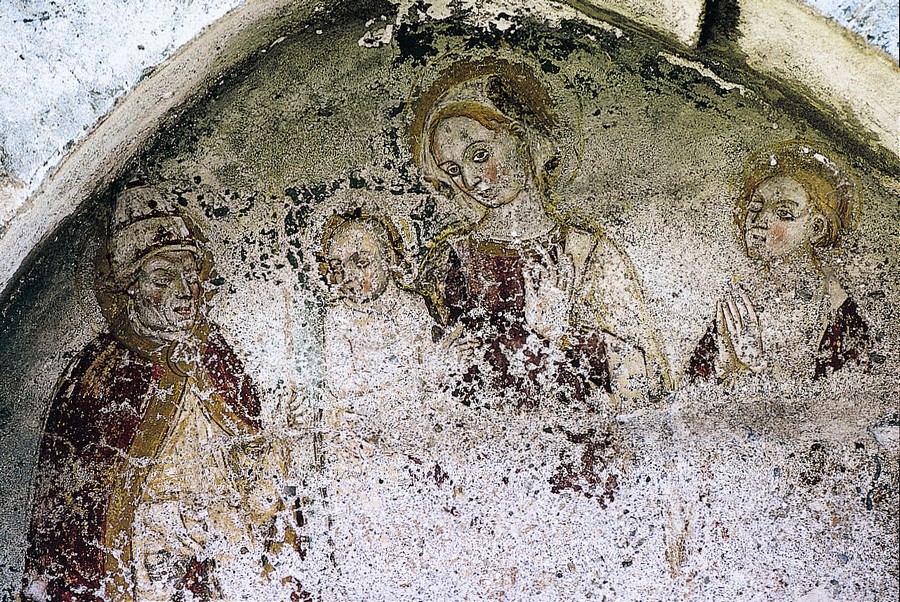
Already mentioned in 1103, the church was practically abandoned at the end of the 12th century; the construction, in ashlars following very regular horizontal lines, is in straight Romanesque style, with a simple ogival arch stone portal frescoed in the lunette with "Virgin, Child, Saint Gregory and a praying man"; above it, opens a semicircular window and then asymmetrically rises the small bell gable.
The apse covered with "ciappe" appears today much lower than the real for the current level of the surrounding land; it is perforated by a semicircular window equal to that on the facade and is decorated in the attic with hanging arches.
On the right side there is a narrow splayed single lancet window with an ogival arch, and on the opposite one opens the side door, which from the inside is inserted in a much wider round arch.
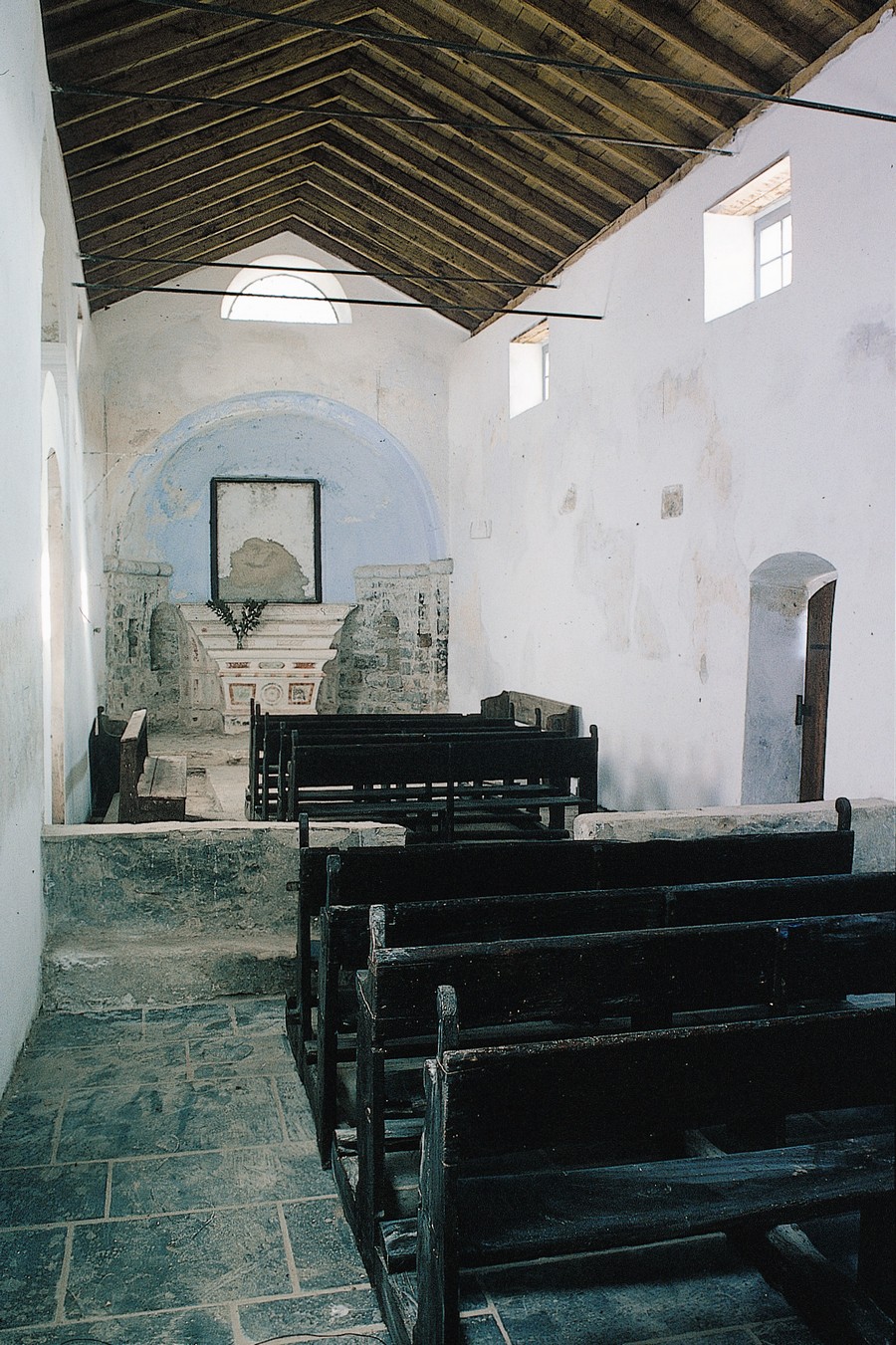
The bare interior, clearly visible from the two square windows on the facade, has a single nave covered with trusses and paved with coarse stone slabs; the classic low wall with stone seats separates the space for the worshippers from that, further away from the altar, reserved to the catechumens.
Back to the car on the provincial road, continue going around the town until you enter it reaching the parking lot.
From there walk down the ramp at the bottom left and then turn left again to reach the oratory of Sant'Annunziata with a stone seat and a fresco on the facade, faced by a recently made fountain; inside there is an "Annunciation" of 1545 by Agostino Casanova.
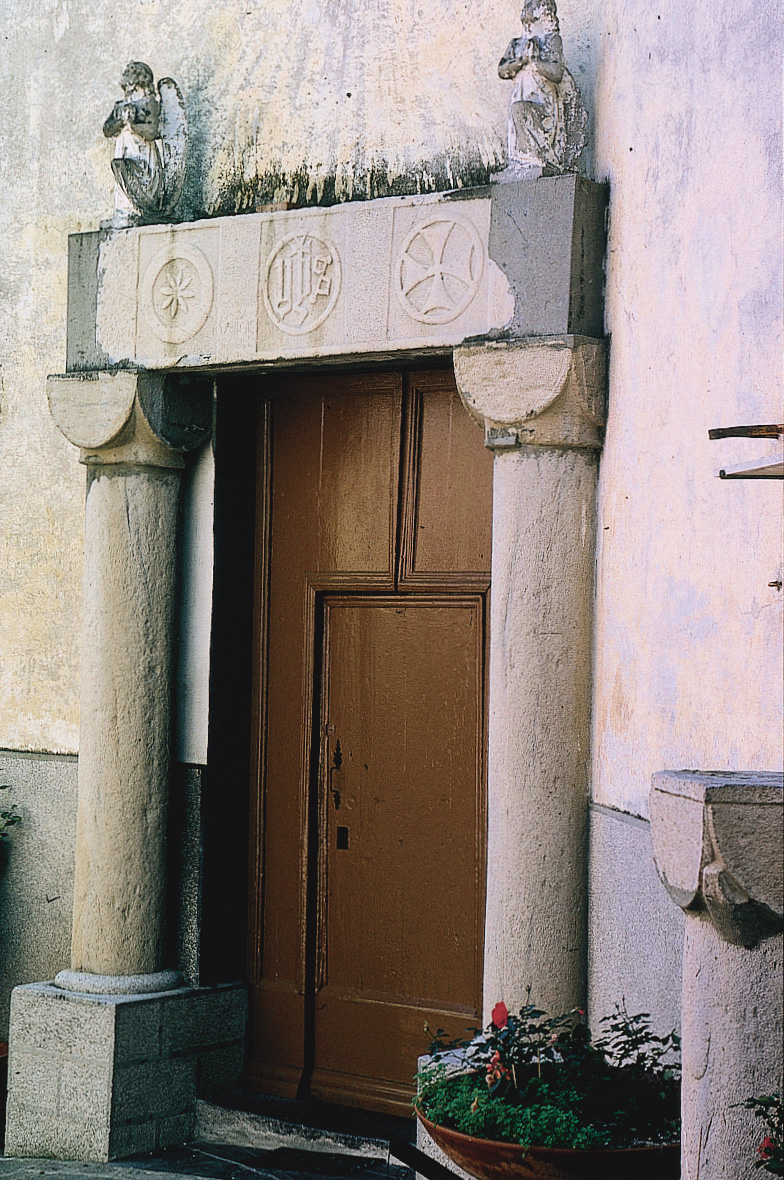
Continuing through the village you’ll arrive to the square on which stands the fifteenth-century church of San Matteo rebuilt in neoclassical style in 1844 by lengthening the two short sides of the original construction of which was saved the beautiful portal, which is today on the right side of the building.
Two columns support the monolithic architrave surmounted by two angles and carved with a Gothic Trigram between a star and a cross; inside the church there is an anonymous "Madonna del Rosario" of 1653.
The house facing the facade retains the traces of an arbitrariness occurred centuries ago, when the carved lintel of the fifteenth-century church was cut in two lengthwise to obtain the jambs of a portal; around the churchyard remain capitals and other fragments of the original church.
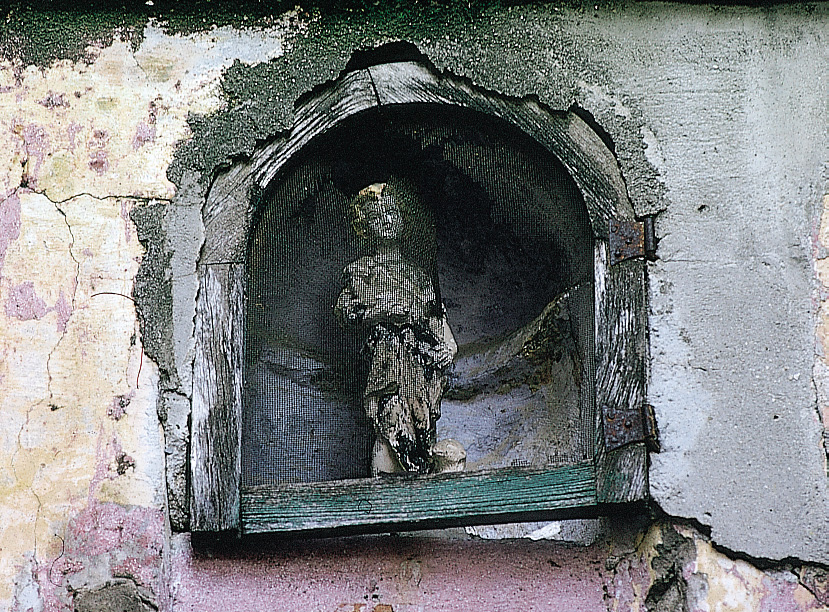
On the portal of the rectory there is the aedicule dedicated to San Giacinto; on the same wall there is also a fascist plaque identical to that of Cesio which recalls the "sanctions" of 1935.
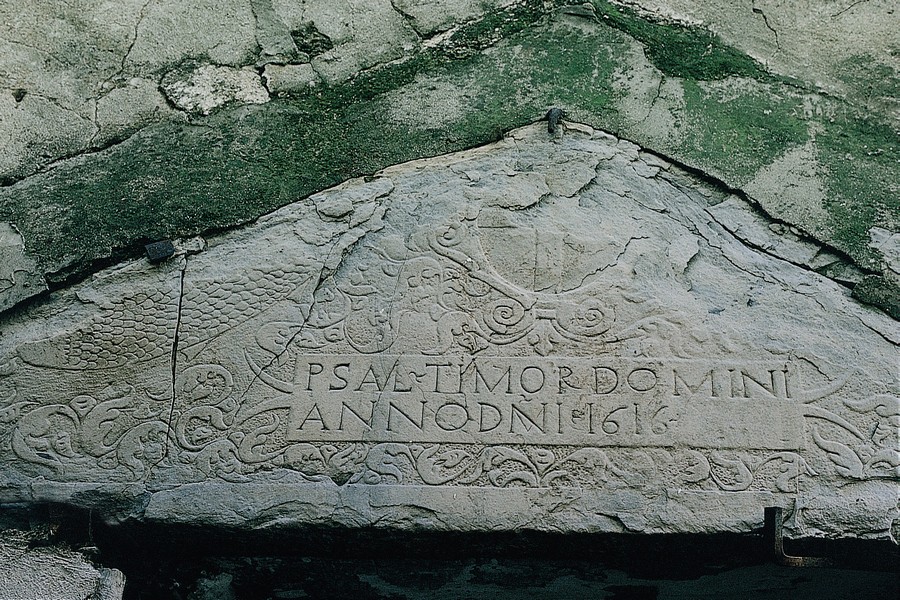
Go down in front of the facade of the church along via Duomo; after a few steps on the right, at number 1, you will be surprised by the beautiful triangular monolithic architrave, carved with floral decorations and the inscription "P S TIMOR DOMINI" of 1616; if you go down on the left and then take the left again you’ll find at number 2 another lintel in black stone carved in high relief with two angels crowning the Virgin holding a book in her hand.
Divided on the two sides there is, also in high relief, the inscription: "DEVHO QI PASI PER LA VI (A) SENPER SALVEA LA VIRGINE MARIA".
Once you are done with the visit of the village, from whose moss-covered "ciappe" roofs exudes a heavy air of resigned abandonment, return to the car and resume the way back, immediately taking the detour after the bridge that takes to Boscomare; the road goes around the town and ends at the parking lot, which is also used as a sferisterio (i.e. a particular type of sport field).
Raise your eyes to observe the roof terrace on the left, then take on foot the concrete ramp to the right and continue straight under the vault from which you can turn right; after passing the window-door of an ancient shop you’ll arrive to the rustic square with black and white cobblestones on which stands the baroque church of San Bernardo of 1797.
The elliptical interior preserves on the left of the high altar a wooden statue of the saint attributed to Maragliano and an anonymous baroque canvas of "The Mysteries of the Rosary"; outside runs along the facade the black stone seat that is repeated in the perimeter of the churchyard up to the loggia with a fountain and a fresco that faces it.
Go up the street on the right of those who leave the church; following the modern terracotta flooring, take the left on via Gioberti which leads to the 16th-century oratory of Annunziata, with stone seats on the facade and along the perimeter of the small churchyard.
Going to its right you will encounter the ruins of an abandoned medieval house on which rests the above stone drinking trough; continuing on the left, go around the apse until you reach the foot of the stairs that climb up; whoever wants can go up to peek into the building's bare interior through the holes in the door.
Returning to the church square, take Via XXV Aprile on the right to go and see the large rectangular wash house facing a medieval house with a roof terrace, from which you can return to the car.
Those who want to go upstream of the town will find the ruins of a watchtower of the fifteenth century, while at the cemetery you will be able to see the few remains of the church of San Siro.
Returning to the car, go down the provincial road and then take the detour to the right that leads to Torre Paponi. The village has severely suffered during the last war due to Nazi ferocity. The victims of this ferocity are remembered by the large monument at the beginning of the town and by the plaques throughout the village.
After passing "Casa della Lavanda" you will arrive to the parking lot from which you can go up on foot leaving the ruins with a loggia on the left; taking the right under the vault of Via Tasso you’ll find, leaning against the left wall, the massive monolith that served as the base of a press.
Going up again you will arrive to the cobbled square on which stands the church of Santi Cosma e Damiano of 1613 which preserves the bell tower of an older building; inside there is an anonymous canvas "The Mysteries of the Rosary" and, on the sides of the high altar, the wooden statues of the two saints naturally attributed to Maragliano.
Opposite stands the contemporary oratory of the Annunciation frescoed on the facade, with the internal walls completely occupied by carved wooden benches; the church and oratory have stone benches on the front which, as is typical of the area, continue along the entire perimeter of the churchyard.
The church preserves the original Gothic Romanesque structures repeatedly retouched until the seventeenth century.
On the gabled façade there is the pointed arched portal in large stone blocks carved on the keystone with a rough Agnus, while the door on the left has a bare irregular monolith as its architrave; the low bell tower decorated with hanging arches, a single lancet window and the coats of arms of the Counts of Lengueglia is original only in its lower part: the spire was rebuilt in the seventeenth century.
The interior is clearly visible from the gate on the facade: originally with a single nave covered with trusses, the building was then enlarged with the addition of the two lateral naves with cross vaults supported by massive square pillars on the left and by low stone columns one the right, one of which, replaced by a pillar, ended up isolated in the churchyard to protect the building with its capital carved with a Trigram in the center and guardian wizards at the corners.
The central wall that delimits the space reserved for the catechumens was covered with sixteenth-century Spanish majolica tiles which were later removed; original is the floor part in stone slabs, as well as the massive monolithic octagonal baptismal font to the left of the entrance and the black stone lintel carved with a fifteenth-century "Ecce Homo" on the internal door that leads to the bell tower.
Returning to the provincial road, continue to descend until the fork to Lingueglietta.