
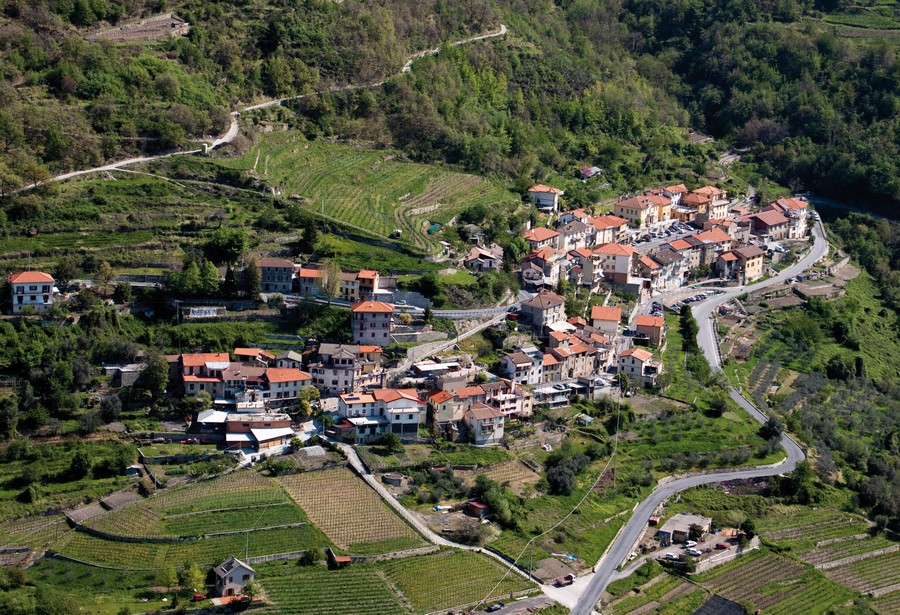
Altitude: 620 m a.s.l.
Area: 28 sq km
Distance from Imperia: km 27
Inhabitants:
- in 1881 1341
- in 2017 685
Patron Saint Day: December 5th - San Dalmazzo
Information: Municipality tel. 0183 33003
Continuing on the State Road, you’ll reach Pornassio after about seven kilometers, scattered across the three hamlets of San Luigi, Villa and Ponti.
At the beginning of the thirteenth century Pornassio was conquered by the Genoese messer Guidofroto Grassello and granted as a fief to the Counts of Ventimiglia; in 1270 it was occupied by the Provencal Roberto di Laveno, expelled four years later by Oberto Doria who brought the village back under the control of Genoa, which in 1283 granted it as a fief to Oberto Spinola.
In 1335 problems arose with the Del Carretto family, and the doge Antoniotto Adorno entrusted Pornassio to the Scarella family of Garessio, who in turn later ceded part of it to the Lascaris of Tenda.
The town would then be long disputed to Genoa by the Savoys, who after buying Oneglia (1576) had an absolute need to connect it to Piedmont by carving out a corridor along the valley of the Impero stream, an operation to which Genoa fiercely opposed; occupied by the Piedmontese in 1625 it would soon be "freed" by Genoa which thus maintained its dominion over the village.
Visit of the town
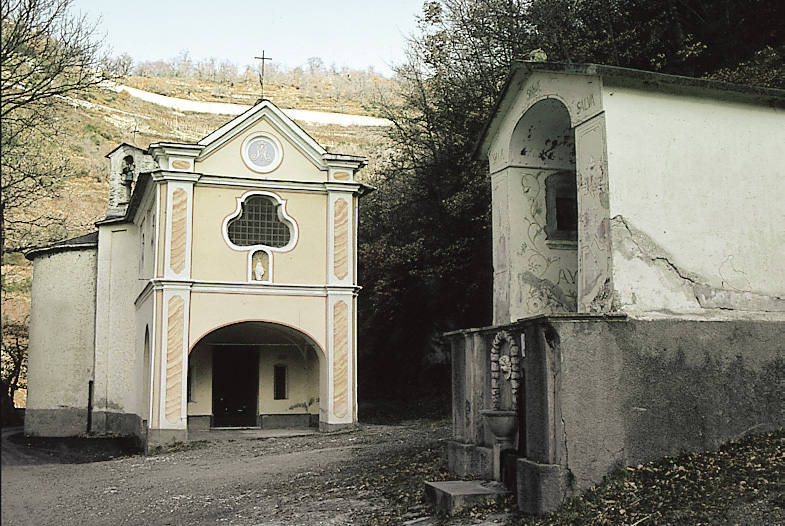
Along State Road 28 there is the chief hamlet of San Luigi with the baroque church of the same name at the beginning of the town and that of Sant'Antonio recently restored at the end of it; before entering San Luigi, which has nothing else relevant to show, take the detour on the left that leads to Villa and at the next crossroads turn right on the dirt road to reach in five hundred meters the grassy area on which stands the Baroque Sanctuary of the Madonna della Chiazza of 1775, faced by the aedicule with a fountain dedicated to the Virgin. Continuing for another five hundred meters beyond the sanctuary, you will reach the path that branches off to the left and leads through the vineyards to the Colombaia, a stone tower built – as a plaque informs us - in 1612 by Stephanus Sibilla.
Going back take the road to Villa again, reaching the crossroads marked by a tall black stone column that holds the statue of the Virgin; from here to the right in one hundred meters you will arrive to the Castle of Pornassio.
The original building was built in the early fifteenth century but has undergone massive renovations over time; it cannot be visited and it’s currently inhabited and divided into three properties, of which the north one is public (Province of Imperia), and is heavily disfigured by recent manipulations.
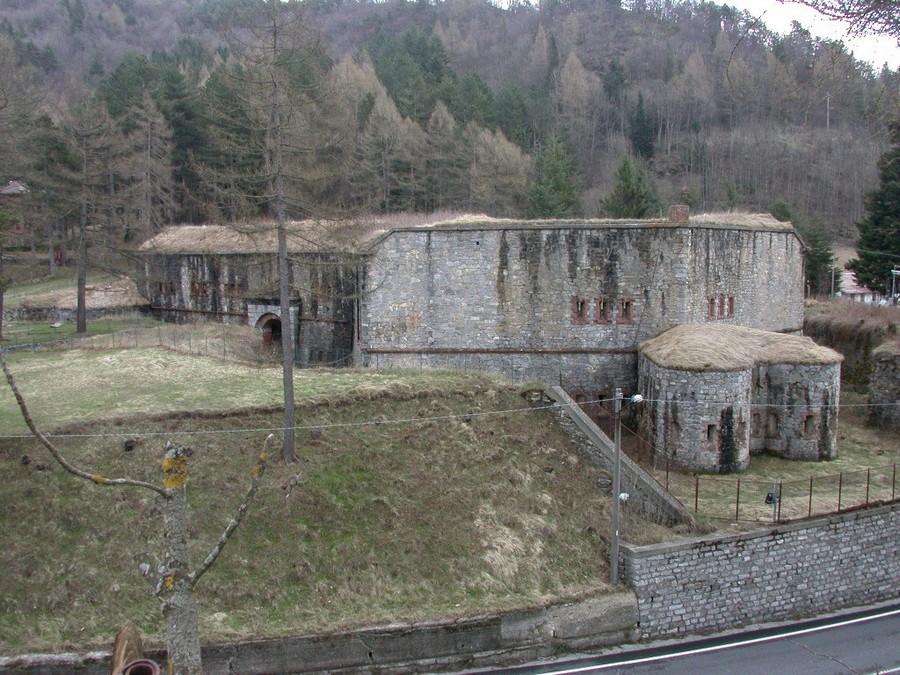
On the east side, at the height of the worn stone pillar surmounted by a ball, the round arched stone portal opens on the internal courtyard; the gate is well protected by the circular guardhouse above it and by a series of slits on the left, above the arch and downstream, while another circular watch tower defends the north side of the fortress.
In the courtyard there are three stone portals that give access to the inhabited rooms: the one on the left leads to the baroque chapel now restored.
Back to the road that goes down to Villa you’ll encounter the hamlet of Barche with the small oratory of San Giuseppe flanked by a washhouse and a drinking trough; a few hundred meters further you’ll arrive to Villa where you can park in the open space on the left dominated, on the opposite side of the road, by the fifteenth-century church of San Dalmazzo.
The building fortunately escaped the Baroque remakes and preserves intact its original features which make it one of the most significant Romanesque-Gothic buildings of western Liguria.
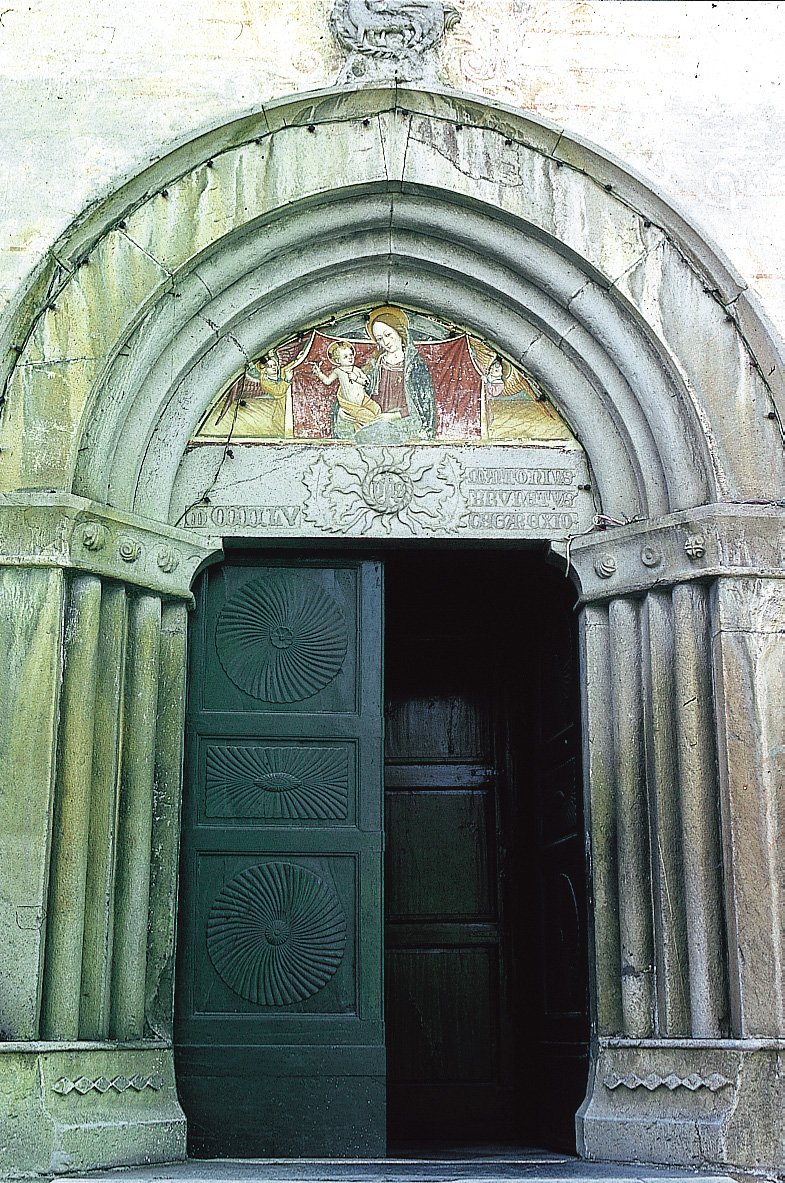
Faced by a paved churchyard, with seats along the perimeter, the gabled façade with a raised central part opens in the splayed portal with black stone columns that join at the top to form pointed arches; the monolithic architrave, carved in a Trigram between oak leaves, is a work of 1455 by Antonius Brunetus de Garexio.
The lunette, frescoed with the "Madonna and Child" by Giovanni Canavesio, is surmounted by a black stone plaque carved with an Agnus and by a small rose window; the attic is decorated with hanging arches, vertical in the central part and inclined in the two lateral ones.
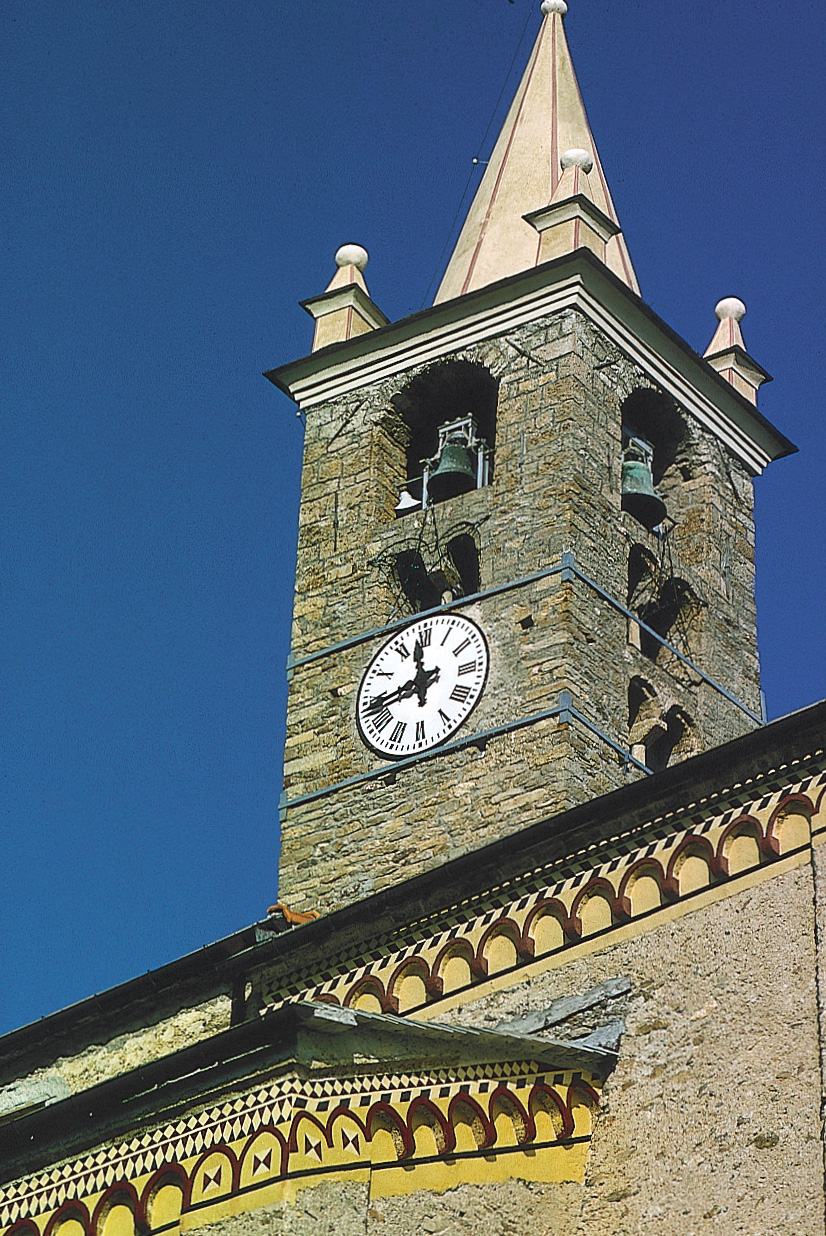
The stone bell tower is an ancient “recycled” tower dating back to the 1100s: it has two high slits in the lower part, surmounted by two mullioned windows above which opens the single-lancet window of the bell cell; not far from the bell tower is the old oratory now abandoned, partly built over a vault that crosses the stream below.
On the right side of the church a double staircase gives access to the side door protected by a portico with a cross vault; on both sides the walls of the section connecting with the apse are enriched by colored hanging arches and diamond-shaped decorations.
The interior is divided into three naves by columns in black stone with dissimilar capitals linked by pointed arches.
On the right side is preserved the original polyptych in polychrome carved wood, with in the center the Virgin and Child in relief on a rural landscape painted background; all around are carved high-relief squares with Stories of the Passion.
The work, made before the construction of the church, is attributed by the parochial registers to an epoch of little later than the year 1000.
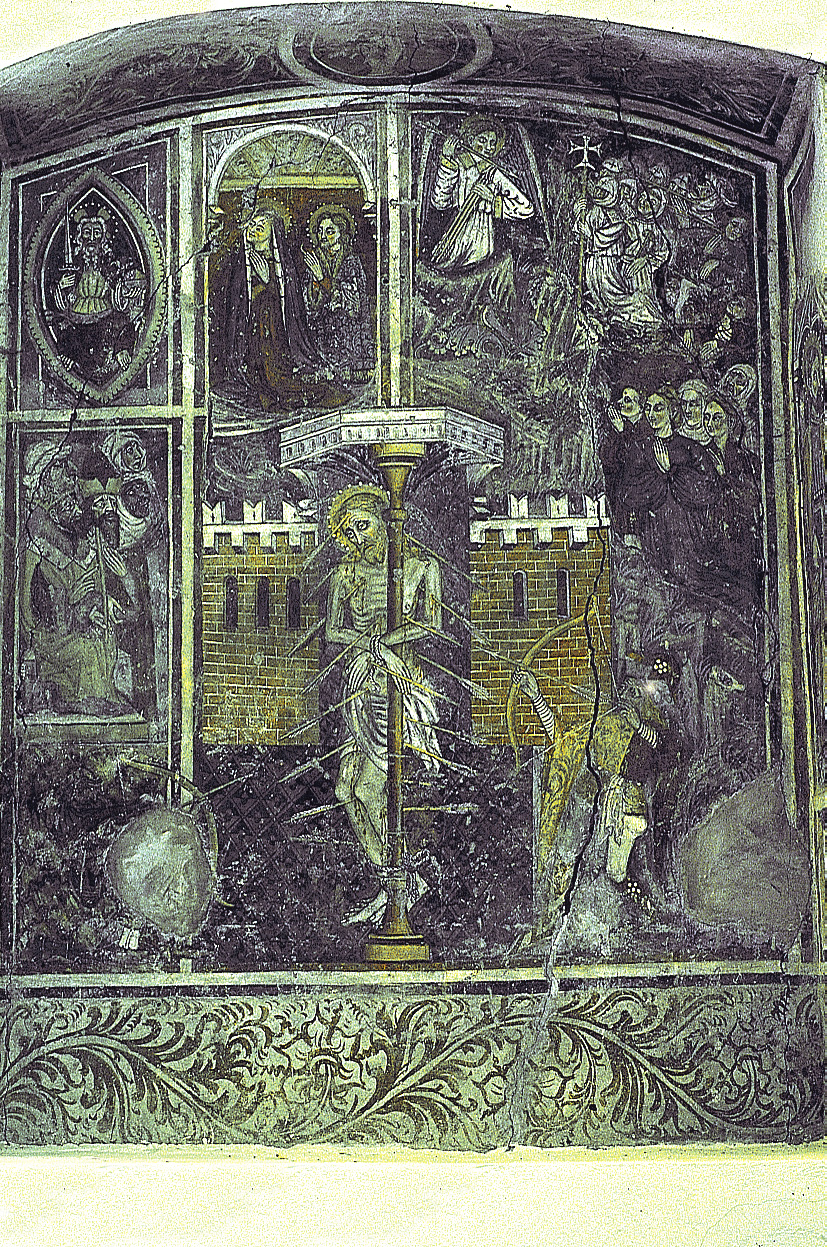
A little further on there is the niche with the fresco "San Sebastiano", dated 1457; decorated with frescoes, all by Canavesio, are also the lunettes of the altars and of the presbytery.
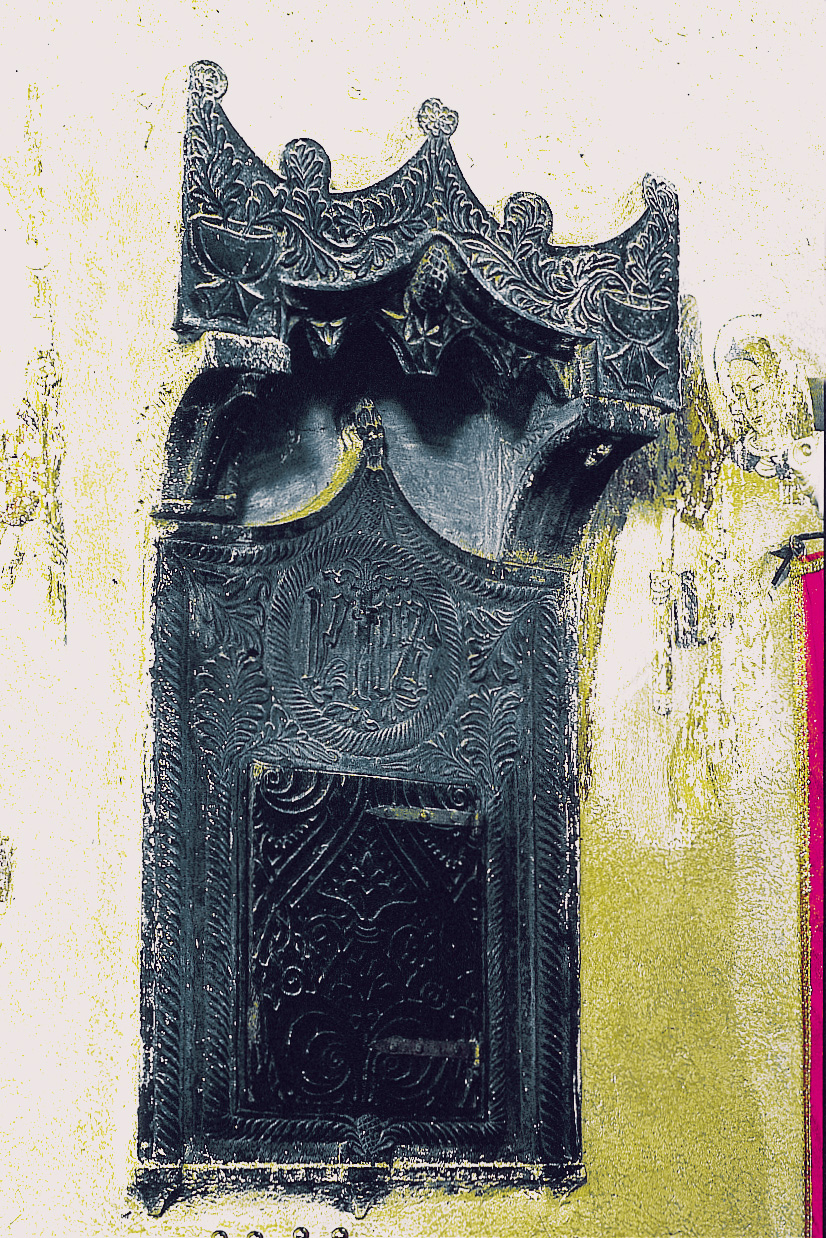
The ceiling of the apse is frescoed with Stories of the Passion; to the left of the high altar is embedded the rich black stone cabinet for holy oils.
The left apse is decorated with an anonymous fresco of "San Biagio"; on the left there is a chapel which houses the baptismal font surmounted by a small wooden temple and a series of wooden statues by the Maragliano school.
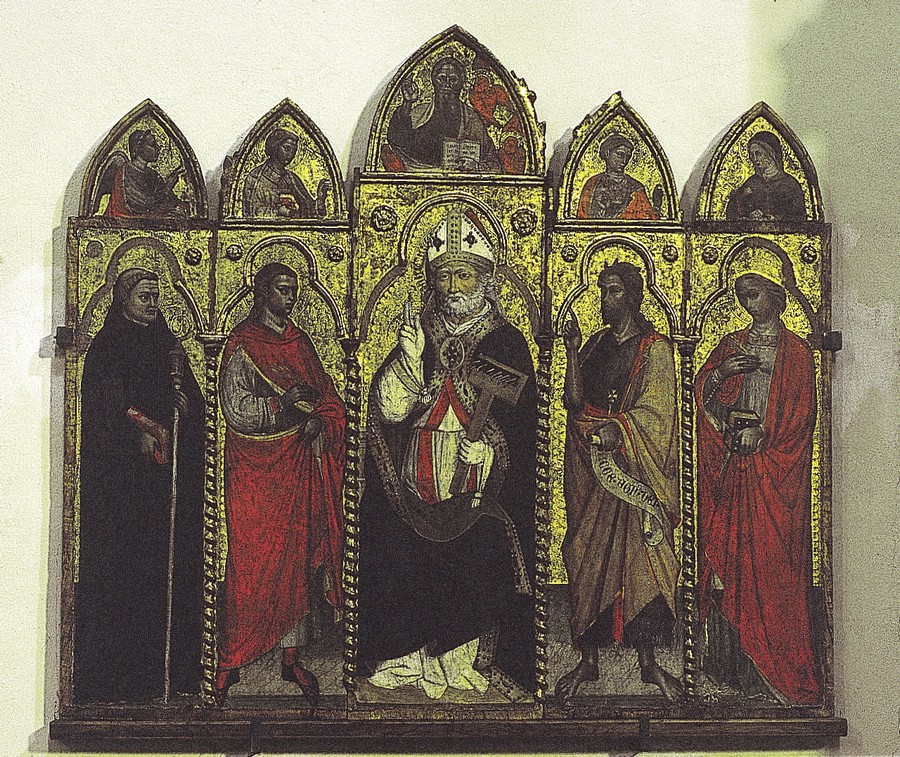
Here is the sixteenth-century polyptych "San Biagio" (the figure of the saint is by Canavesio).
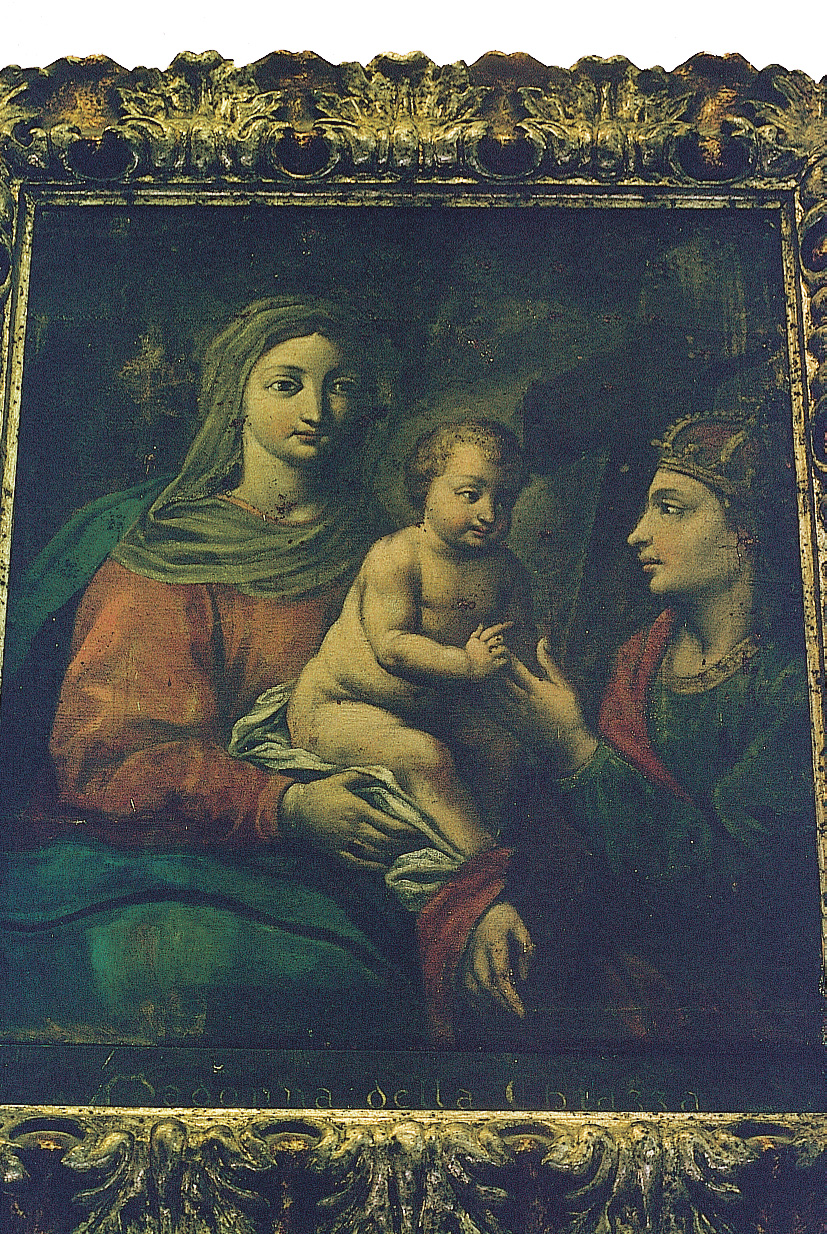
Next to the fresco of the Virgin hangs the original painting of the Madonna della Chiazza which was formerly in the homonymous sanctuary.
Go back to the car and continue, passing on the left the black stone overdoor with an illegible decoration on the house at number 2; go down to the crossroads from which you will turn right to Mendatica thus reaching Ponti where you can park in the small open space on the left at the beginning of the inhabited area.
The village, apparently modest and humble, reserves instead the surprise of a whole series of carved portals that document its past splendor.
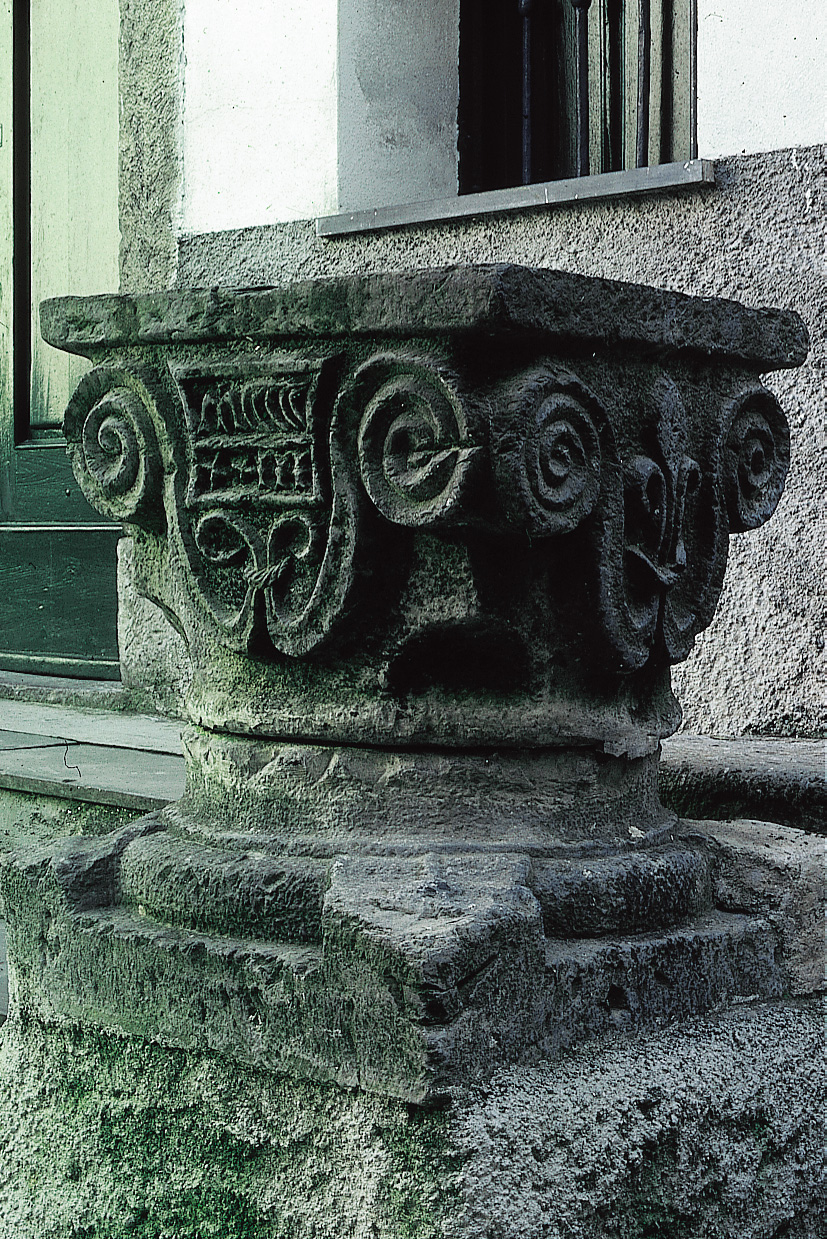
After crossing the bridge over the Arroscia with its sides flanked by tall stone houses, you’ll encounter the sixteenth-century chapel of San Bernardo with a beautiful embedded capital next to it and the remains of columns in the open space; in the bell tower there is a slit to remember its military use.
A portal under the vault on the right has a 1769 over-door by the modest Raffael De Nanis, while in the houses facing the chapel there are massive black stone portals with monolithic or arched architraves, and a small terrace with stone shelves; embedded in the wall is also a fragment of a plaque of 1409.
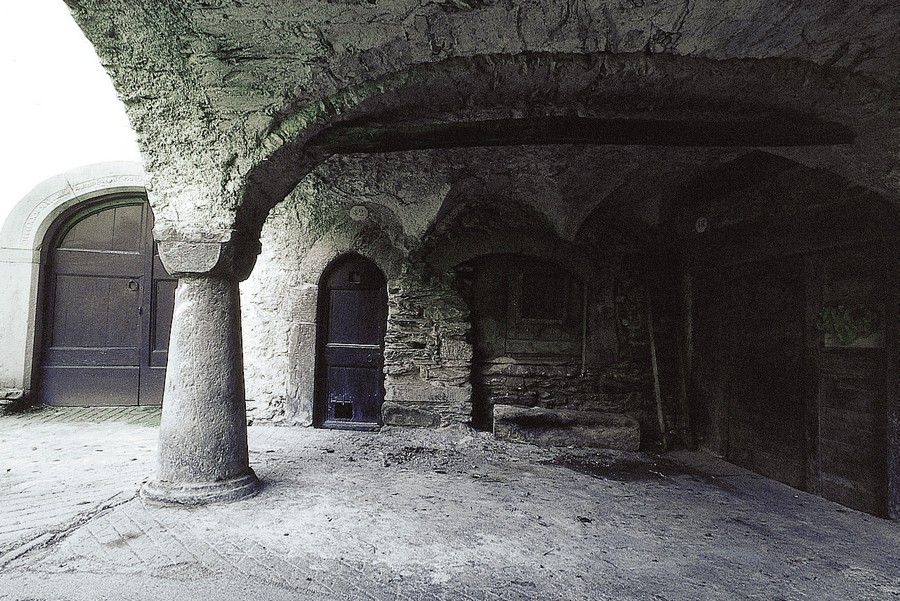
Continue to encounter, ahead under the vault on the right, a pointed arch stone portal with a large monolithic black stone step followed by the window-door of an ancient shop, and thus reach the Municipal Loggia supported by a low stone column, under which open three portals respectively with a monolithic architrave, a round arch and a pointed arch, a complete synthesis -also in chronological order- of the three successive typologies of the medieval portal; a little further on, a rococo carved stone portal of 1825 completes the surprising “exhibition” of portals.
Immediately after the loggia opens another portal with a round arch of 1447 (where the number 7 is obtained with as many bars instead of the Roman VII); the writing that runs along the arch - the work of the "Magister" Anthoni Brighensis - uses characters stylized and transformed into decorations that make it unintelligible in the central part.
In front of it flows Rio Valverna which feeds the movement of the large iron wheel of the oil mill behind it.
After passing the sections of columns you will encounter other stone portals until, leaving the town in the area called "of closed vegetable gardens" you will arrive to the fountain with a wash basin and a drinking trough; the inhabited area ends with the well-kept aedicule of Sant'Anna with the cobbled driveway lined with rose bushes.
Going back you can pass under the vault next to the washhouse to take a peek at the archaic barns and then, upon arriving to Vico Lazzaretto which opens to the right, walk along a stretch of it under the vault and then take the right under the other vault.
You will thus reach a very small widening; a bit further there is a space closed at the bottom by pieces of stone arch that offers you a view over the stream and the old houses of the village.
Returning to the chapel of San Bernardo, take the ramp on the right that climbs following the signs to San Rocco; after passing other stone portals half hidden by a pillar on the right you will arrive to the washhouse and then to the small grassy area with horse chestnuts on which stands the chapel of San Rocco which has embedded inside a plaque with a high relief of the saint, and from which you can have a panoramic view over the stream and the archaic poor "ciappe" roofs of the village.
Back to the car continue towards Mendatica; after sixteen hundred meters a sign hanging on a light pole will inform you that there, on the right, there is the "Prea da cruxe" (stone of the cross).
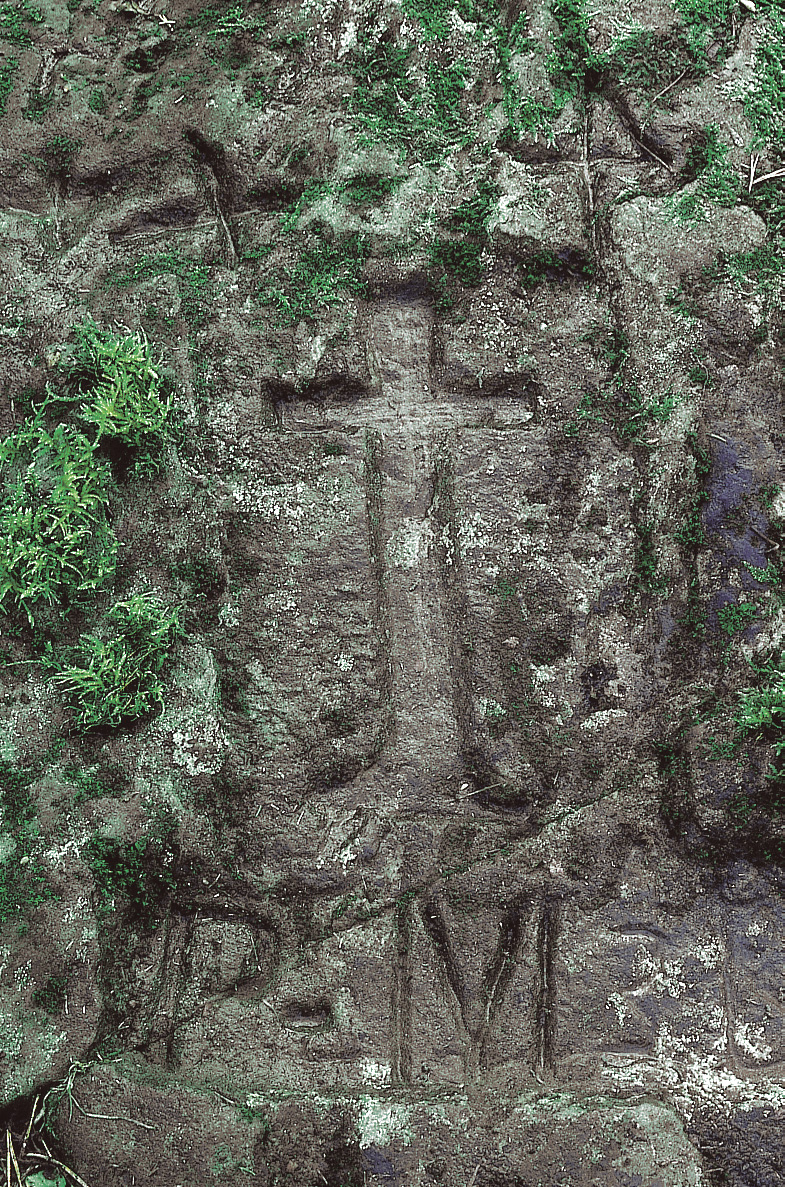
Leave the car and go down the escarpment to the right for about fifteen meters until you reach under the chestnut trees the wide flat rock slightly emerging from the ground that carries engraved, about one meter from the side that faces the road, an inscription about fifteen centimeters long only partially legible which can be interpreted as "P - M 3 b 1..9"; above the writing is carefully chiseled by a depth of one centimeter a cross about twenty centimeters long surrounded by other much smaller, simpler and more superficial crosses.
Nothing is known about it: neither what the inscription means, nor who and why has chiseled the accurate large cross, nor those that crown it, nor if they are all from the same period or engraved in different periods.
As you mull over it, go back to the car, turning left at the crossroads that leads to Montegrosso Pian Latte.