
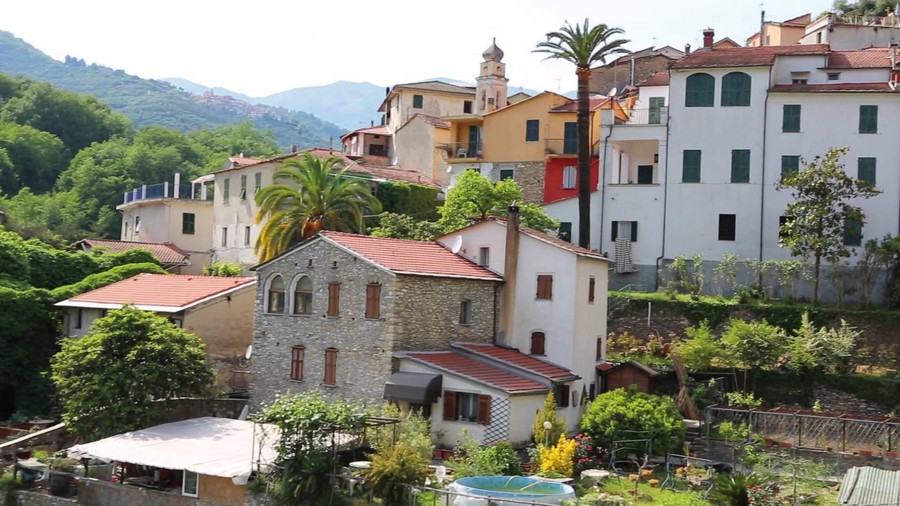
Altitude: 175 m a.s.l.
Area: 15 sq km
Distance from Imperia: 11 km
Inhabitants:
- in 1881 2180
- in 2017 494
Patron Saint Day: June 24th - San Giovanni Battista
Information: Municipality tel. 0183 282487
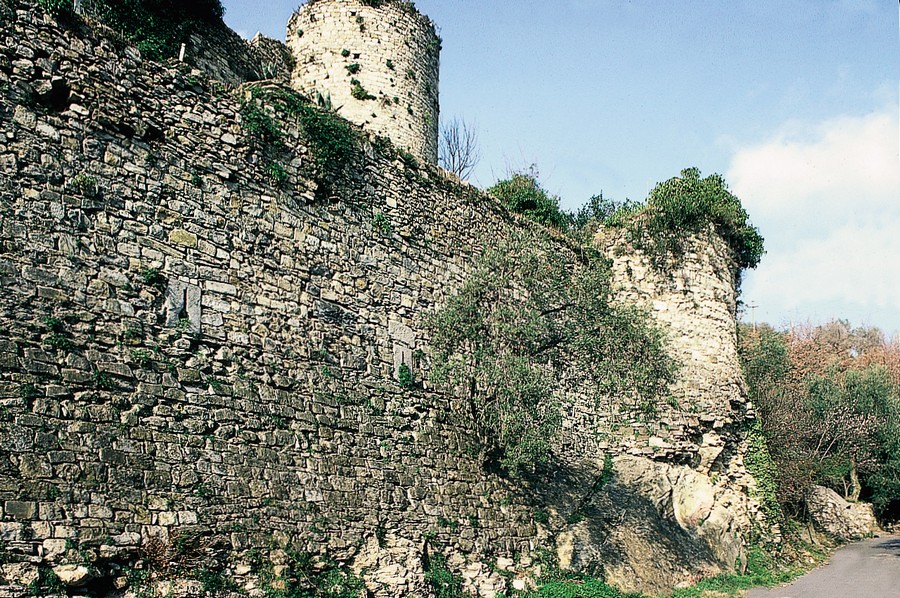
The name Prelà derives from the term "pietra lata" (wide stone) with which was called the vast rock on which in 1150 the Counts of Ventimiglia built the castle.
In the second half of 1200 the territory under the control of the castle of Prelà was divided into two: Prelà Superiore with the castle that remained to the Counts of Ventimiglia, while Prelà Inferiore passed to the Grimaldis who in 1333 sold it to Antonio Doria, lord of Oneglia.
After various other events, finally in 1455 the reunification took place under the count Tebaldo Lascaris di Tenda whose successors, in 1579, sold the fiefdom to Emanuele Filiberto of Savoy whose family always retained its dominion.
Visit of the town
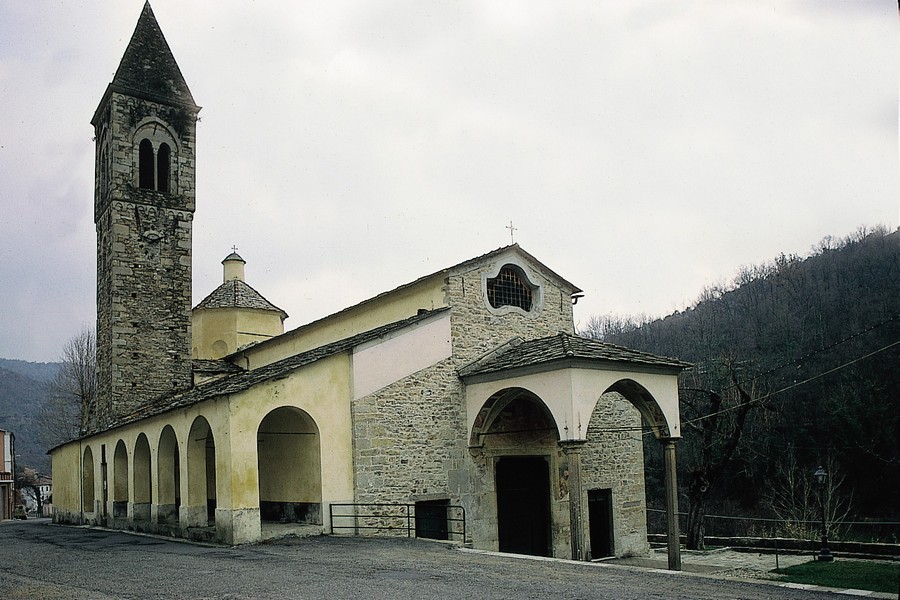
From the provincial road, take the detour to the right that enters the village and, after passing on the left the baroque church of San Giacinto with a colorful altar, continue past the yellow building with a sundial at number 43 to arrive to the fifteenth-century church of San Giovanni Battista del Groppo.
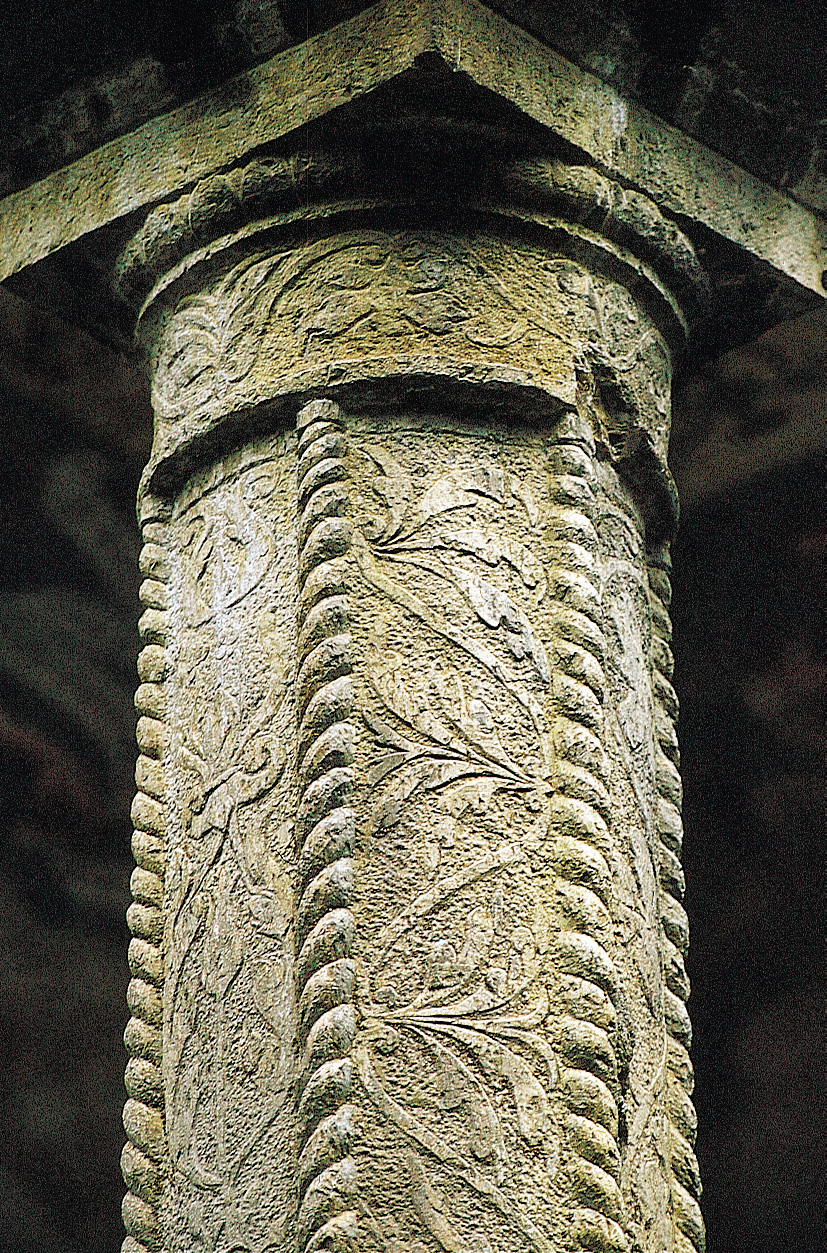
The façade, in exposed stone, partially plastered, is preceded by the sixteenth-century portico supported by two slender octagonal stone columns carved with a vertical braided motif; under its cross vault, opens the portal surmounted by the rough fresco of 1552 "Decollazione di San Giovanni Battista" by Johannes Cangiasius de Porcifera.
Along the left side of the church runs a narrow porch from which rises the square-stone bell tower, with mullioned windows on the bell cell decorated with hanging arches.
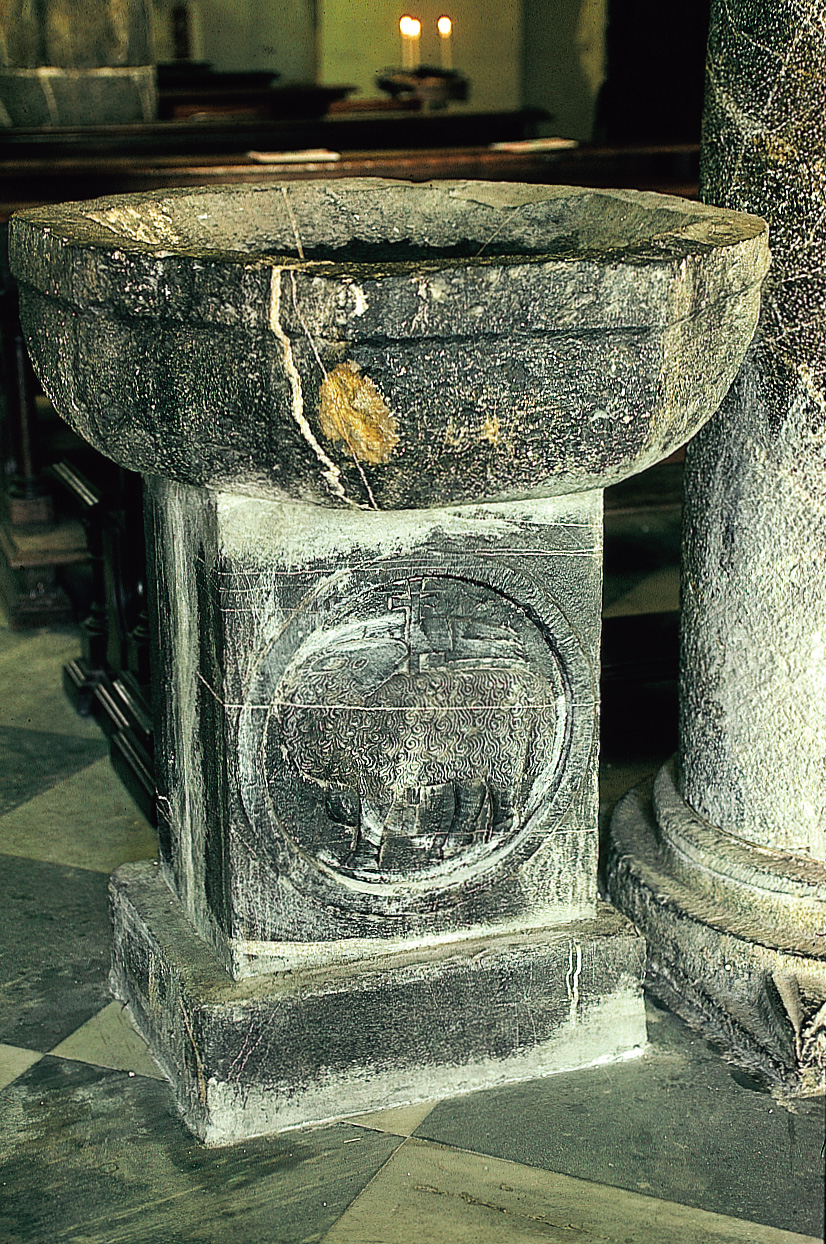
On the external right apse is embedded a carved lintel transferred there from the demolished church of San Luca outside the town; from the same church comes the monolithic baptismal font in massive octagonal stone, mounted on a small pillar carved with an Agnus which stands inside to the right of the entrance and is used as a stoup.
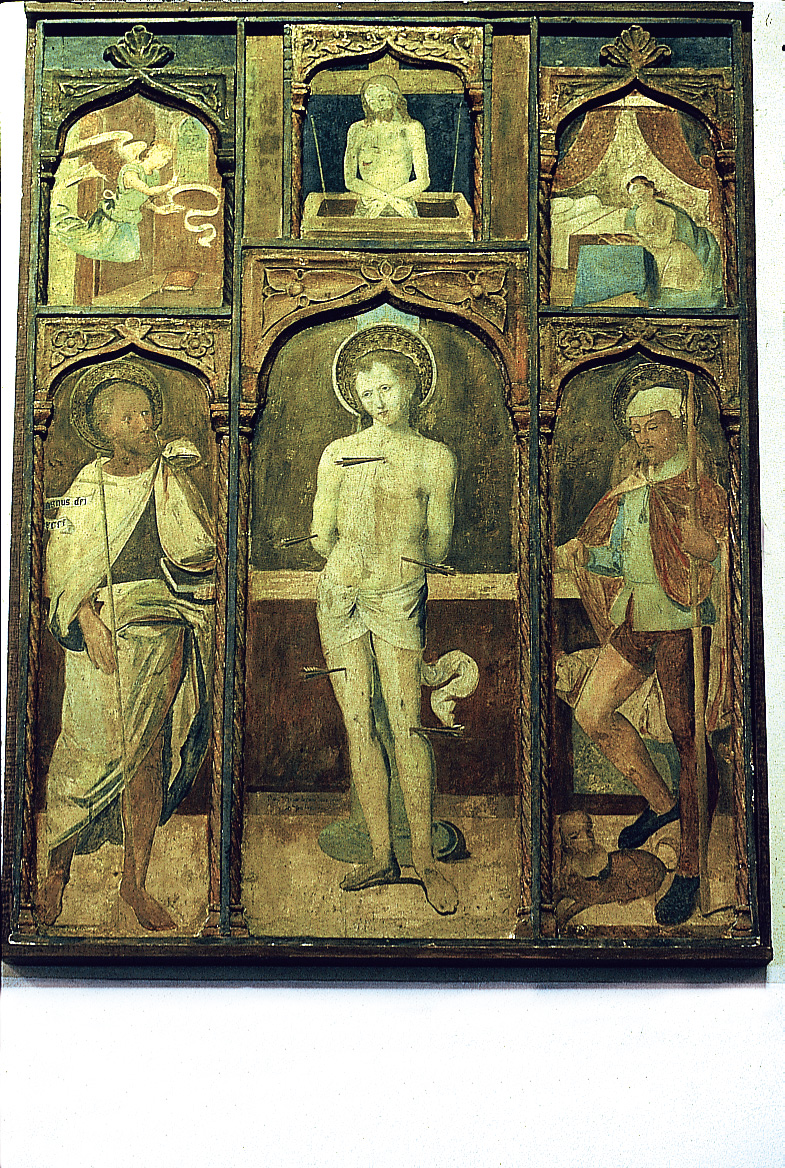
The church has three naves with barrel vaults, divided by low stone columns with capitals carved with rosettes that support pointed arches; to the left of the high altar is the polyptych "Santi Sebastiano, Giovanni Battista and Rocco", by Agostino Casanova, of 1547; on the right there is an anonymous canvas with the "Deposition".
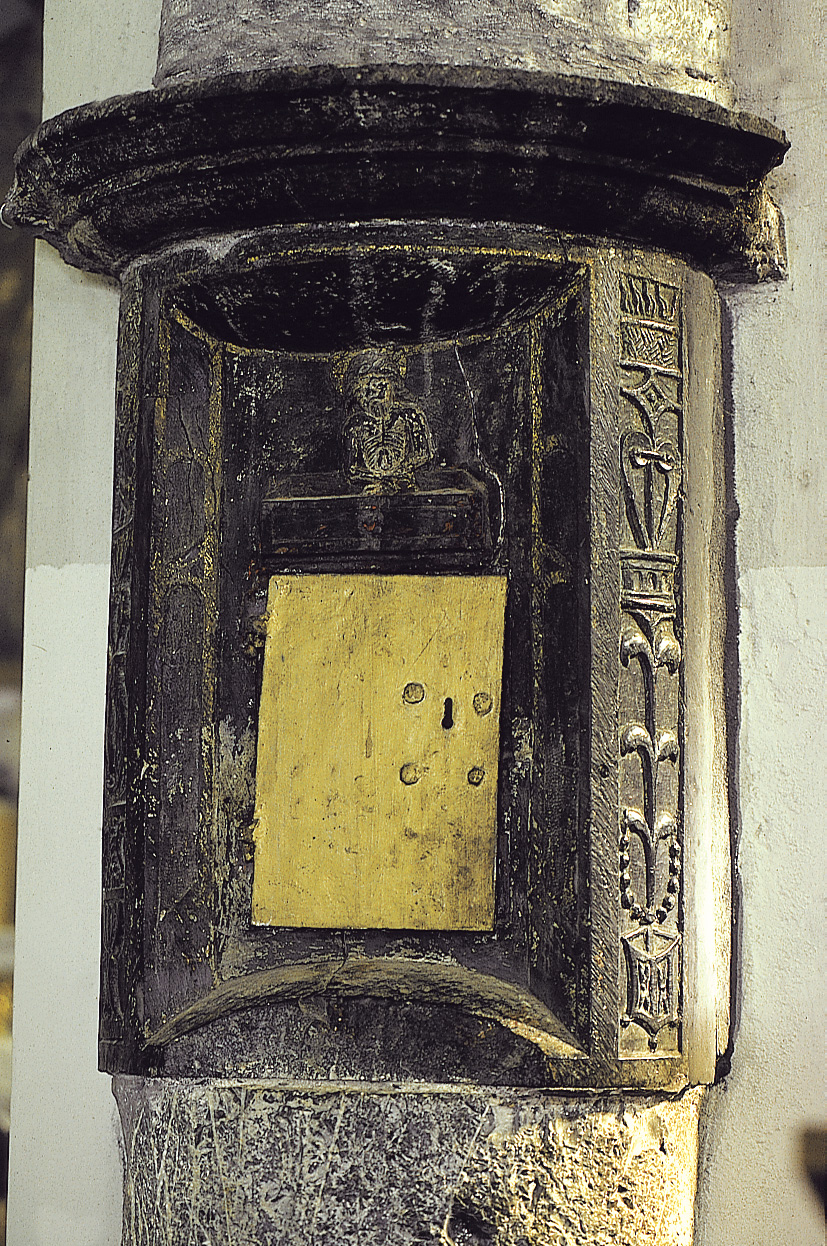
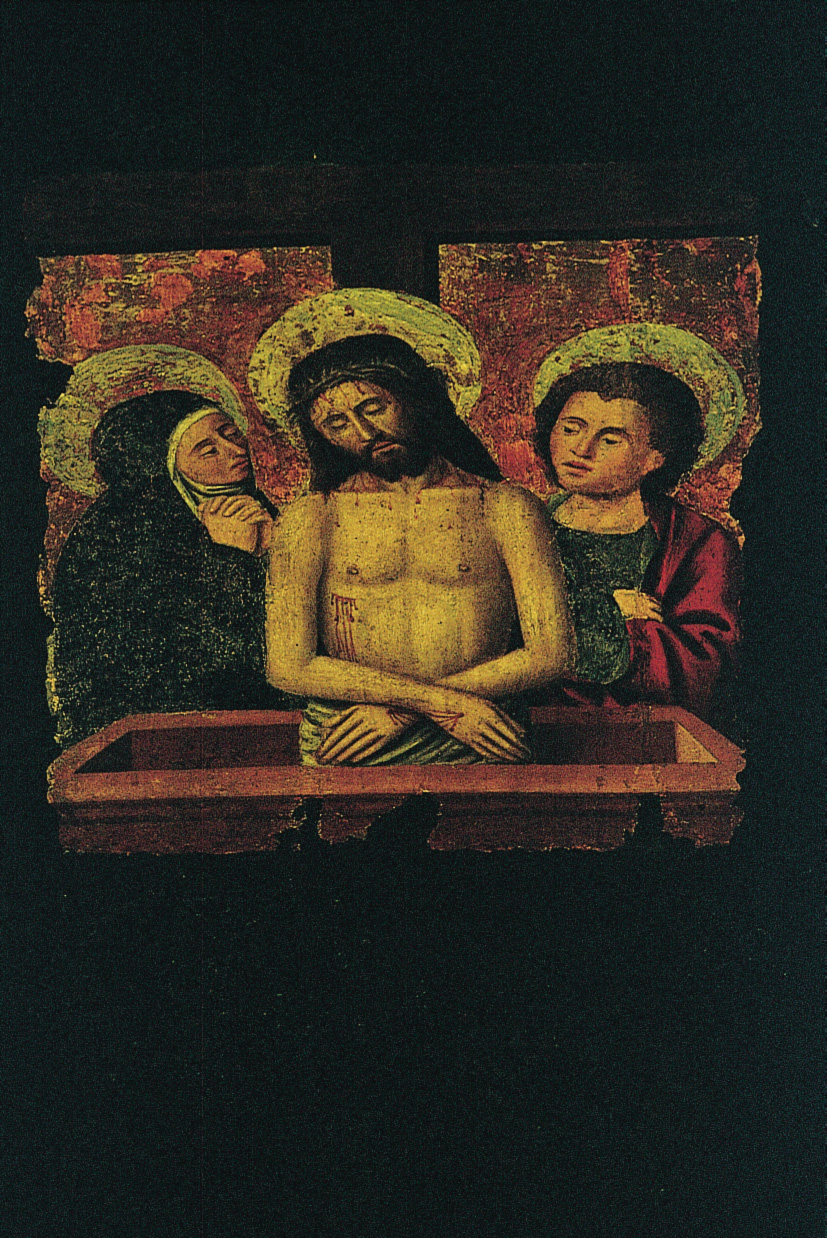
In the column on the left of the high altar has been created the cabinet for the holy oils in black stone with a roof, carved with an "Ecce Homo" and other bas-reliefs from the Renaissance period.
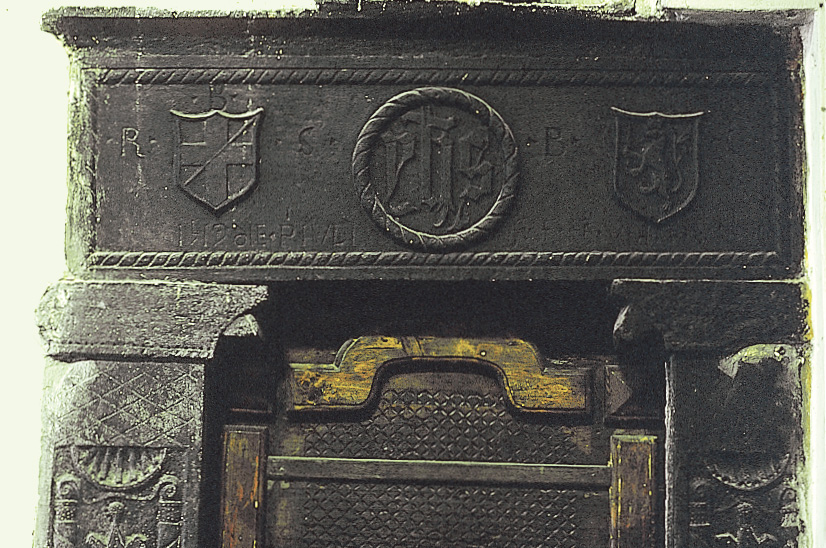
The nearby portal that leads into the sacristy, of 1519, is carved on the lintel with a Trigram with the letters RSBC, flanked by the heraldic shield of the Lords of Maro and Prelà (barred cross) on the left and by that of the Grand Bastard of Savoy (rampant lion with a sword) on the right.
The sacristy preserves a carved walnut wardrobe; on the floor are several eighteenth-century mortuary plaques, including that of 1777 with the original name of the church "S. JOHANNES BAPTISTAE DE GRUPPO".
In front of the church stands the baroque oratory of Santa Maria Maddalena now abandoned, and to the right of the apse the Chapel of the Daughters of Mary erected in 1851.
Returning to the car continue towards the mountain and after passing the oil mill to the right of the bridge you will reach after a kilometer and a half Costiolo, also called "Cà dei Fenocchi", where at the beginning of the village, on the left above the road, remain the ruins of the old lodging for travelers.
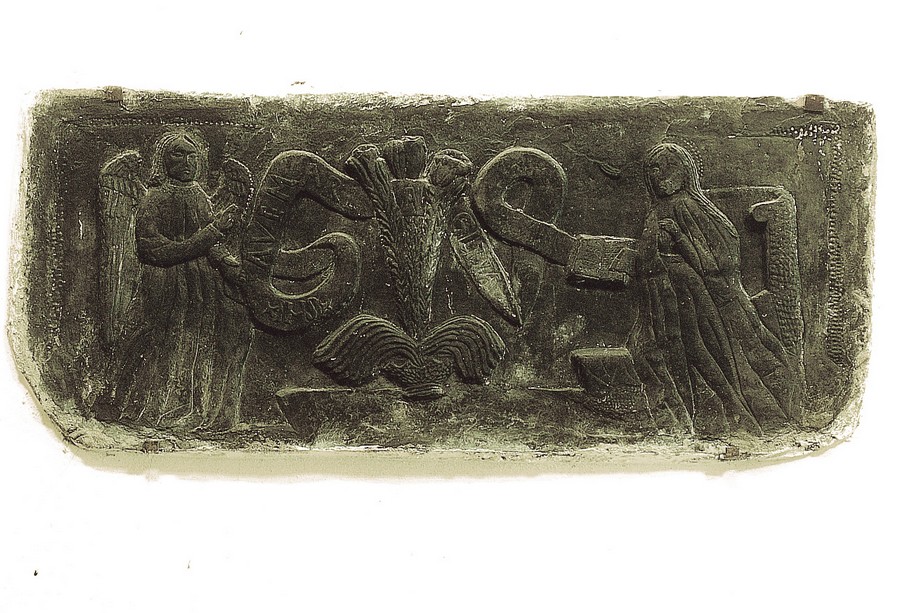
Walk up the short ramp that leads to the small oratory of the Assumption of the Virgin, built in 1265 by Guglielmo Fenocchio and then completely rebuilt in the Baroque period; of the original structure has remained the monolithic architrave carved with an "Annunciation" now embedded inside to the right of the main altar.
The handful of houses that make up the inhabited area denounces evident signs of abandonment: continuing on foot for a hundred meters, turn left and after a few steps you will be in front of the remains of the Turkish-barbarian defense tower which has now completely collapsed, of which remain only the quadrangular base and an arch that rests on the adjacent abandoned house, from whose door you can see other deteriorating farmhouses.
Going up the path to the right you’ll find after a hundred meters a baroque aedicule, just beyond which are the medieval ruins of the primitive inhabited nucleus.
Returning to the car, at the crossroads continue straight on and then cross Tavole passing the baroque oratory of San Carlo in front of the fountain with a drinking trough and flanked by the house at number 15 with a sundial, up to the concrete ramp on the left that leads to the churchyard of the Sant'Annunziata church, entirely rebuilt in 1735.
The original building, dedicated to Sant’Agostino, dates back to the fifteenth century, a period of which remained the lower part of the bell tower up to the bell cell with round arches and a slit.
The monolith affixed above the entrance also belongs to the original construction, carved with an "Annunciation" and a Trigram, above which is embedded another plaque carved with a simple Trigram; to the left of the staircase in front of the church are pieces of columns and a capital, two more are placed at the entrance of the churchyard and a stone carved with hanging arches is affixed over the balustrade on the right.
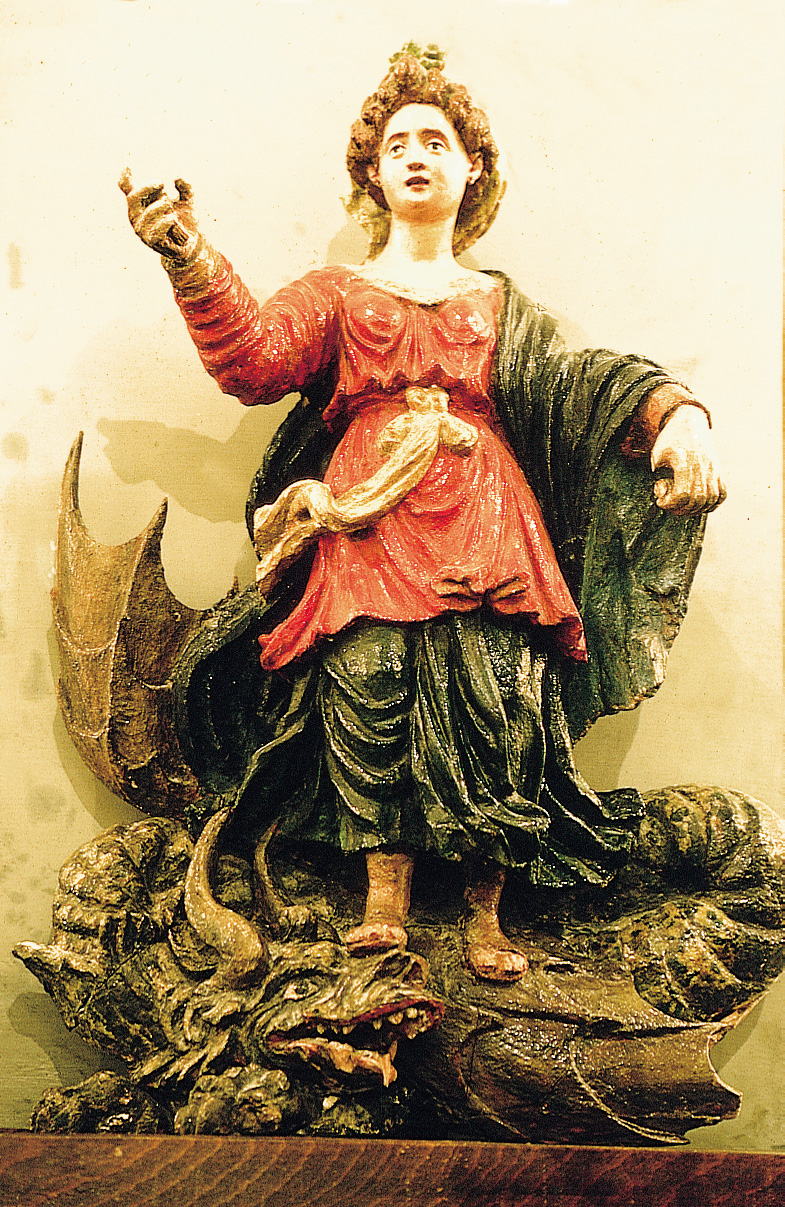
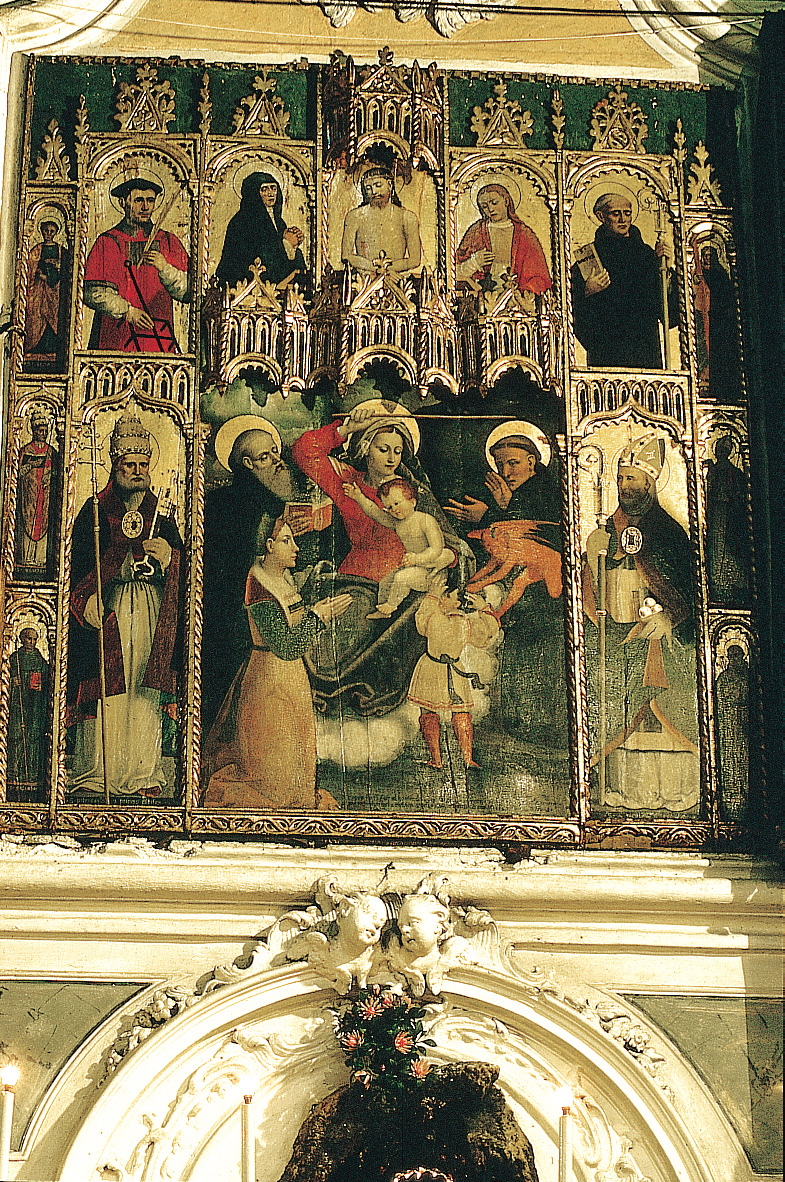
The interior houses an "Annunciation" by Francesco Carrega above the high altar; on the right there is the anonymous polychrome wooden statue of Santa Margherita of the twentieth century, and in the chapel next to it the recently restored polyptych with gold background "La Madonna del Soccorso" by Agostino Casanova of 1537; in the third altar on the right are preserved behind the curtain the bones of San Felice, Santa Costanza and Santa Vittoria.
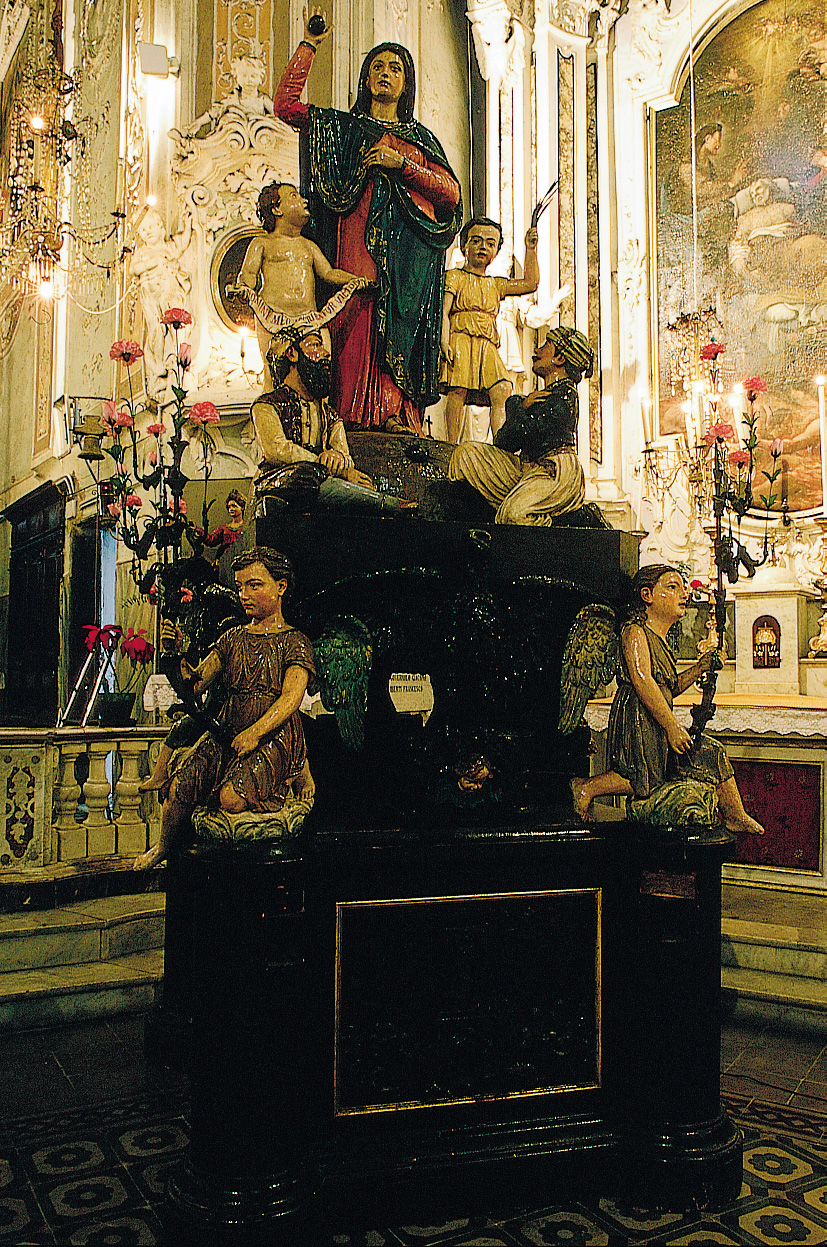
The church today also houses the massive procession trunk "The Virgin and the Turks", built in 1888 by the Roman sculptor Antonio Biondi, which commemorates the victory of the Christians in the battle of Lepanto (1571).
The Madonna between two angles blocks a cannonball with her raised right hand; at her feet two chained "Turks" ask for mercy.
The heavy base that supports this group is supported by large eagles and angels, in turn resting on a massive chest with walls carved with battle scenes.
When the monumental work reached Tavole it was necessary to widen some roads to be able to carry it in procession; and in 1908 was also built the chapel attached to the facade of the church intended precisely to preserve the sculptural group.
From the church you can climb the ramp that along Via Revelli takes you to the chapel of the same name on the left of the home of the parents of San Benedetto Revelli (829-900), who was later born in Taggia where the family had moved.
Going back, after passing under the pointed arch vault, take the path on the right, reaching in a few minutes the hamlet of Novelli, with its partly abandoned archaic houses.
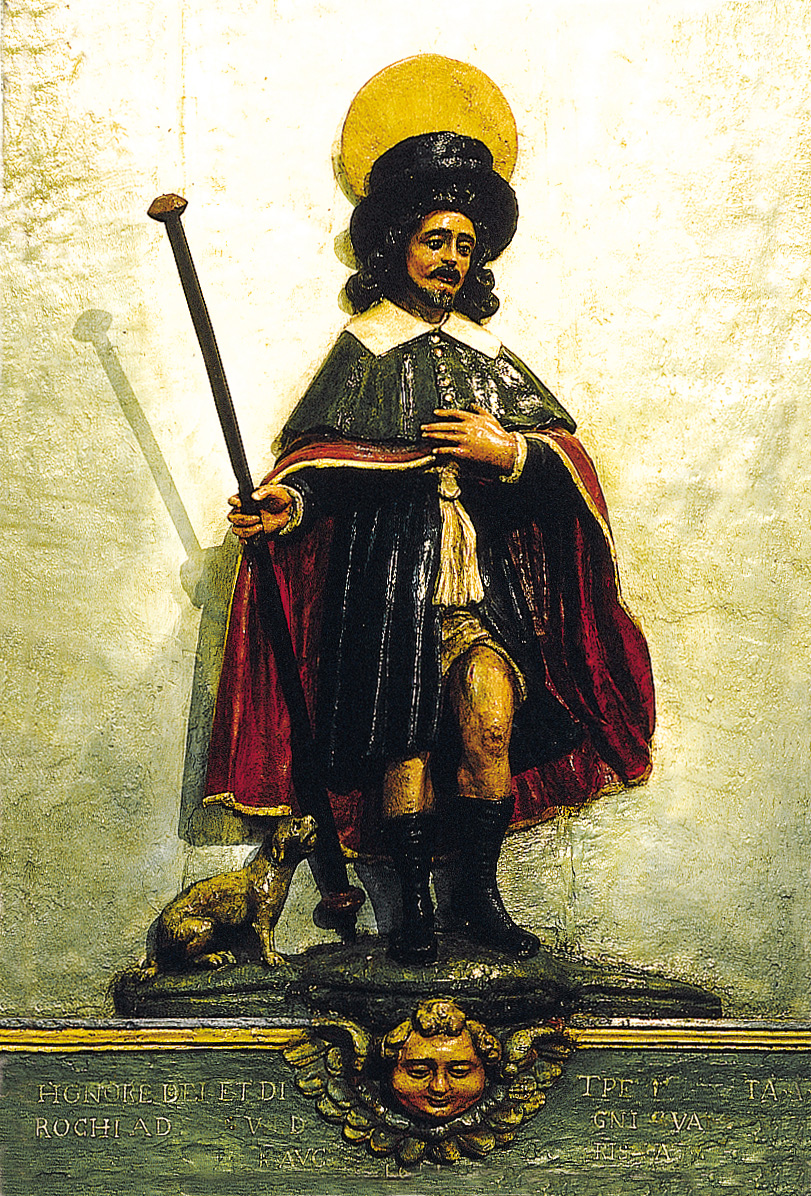
In the chapel of San Rocco there is a wooden statue of the saint, recently restored, of 1611.
From there climbs to the right the mule track which in half an hour takes you to the church of the Trinity which stands in the countryside of Cian di Sella, surrounded on three sides by a robust wall.
Returning to the car continue to climb until you reach Villatalla, continuing on the brick ramp to the parking lot from which you can walk right to the churchyard of the church of San Michele, built in 1470 and then redone in baroque forms after a lightning in 1671 struck the bell tower which collapsed on the roof, demolishing it.
Of the original church remain the black stone lintel of the facade carved with an Agnus, the lower part of the bell tower with slits, the rustic octagonal stone baptismal basin preserved in the churchyard and the pieces of column reused as seats along the external wall.
On the left side there is the ogival-arch stone window of the sacristy; inside, to the right of the side entrance, is preserved the polyptych of the first half of the sixteenth century "Madonna and Saints" by Agostino Casanova.
Returning to the open space where the Baroque oratory of San Giovanni Evangelista stands, take the car again and follow the signs to the "bowling ground of the woods" until you reach, in less than a kilometer, the grassy area in the middle of the chestnut grove on which stands the Chapel of Madonna della Neve of 1521, of which you can see, as you approach it, the apse pierced at the top by a small four-rays stone rose window.
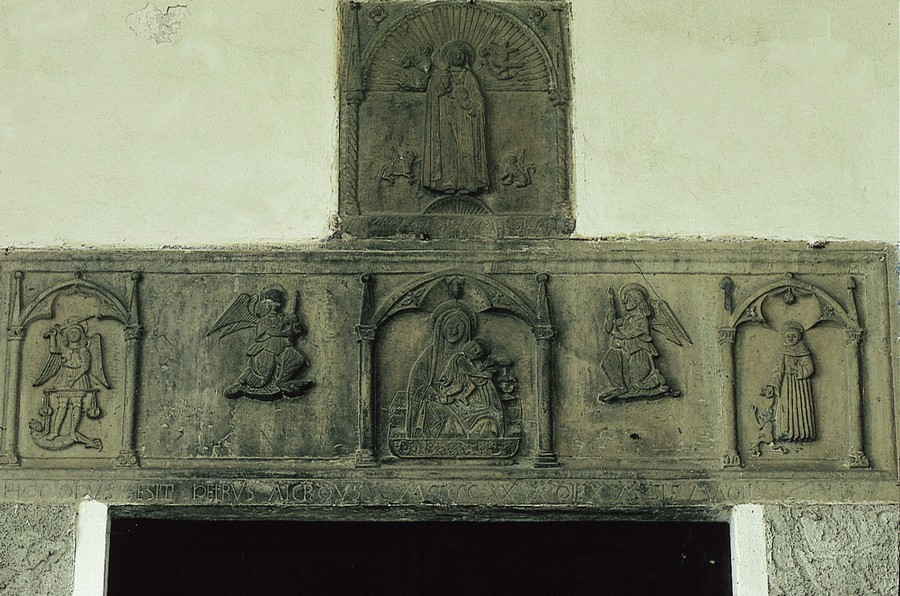
The monolithic architrave on the facade was sculpted by Petrus Aicardus with the Virgin and Child in the center, two angles on the sides and St. Bernard on the right keeping his monkey-like devil on a chain; above it is affixed another rectangular plaque carved with the image of the Madonna to which the chapel is dedicated.
Returning to the Provincial Road, descend to the valley until you encounter the detour to the right that takes to Valloria (from "Vallis aurea"), where you can park on the square in front of the church of Saints Gervasio and Protasio faced by the stone arches that house the beautiful fountain with drinking trough and an aedicule with a little Madonna.
The original church was built in the fifteenth century, a period of which have remained the bases of the columns in front of the entrances of two houses, of which the one at number 2 also has a lintel of 1520 carved with an "Annunciation" and floral friezes; another much simpler lintel carved with a Trigram is at number 3, visible by leaning beyond the small wall of the square.
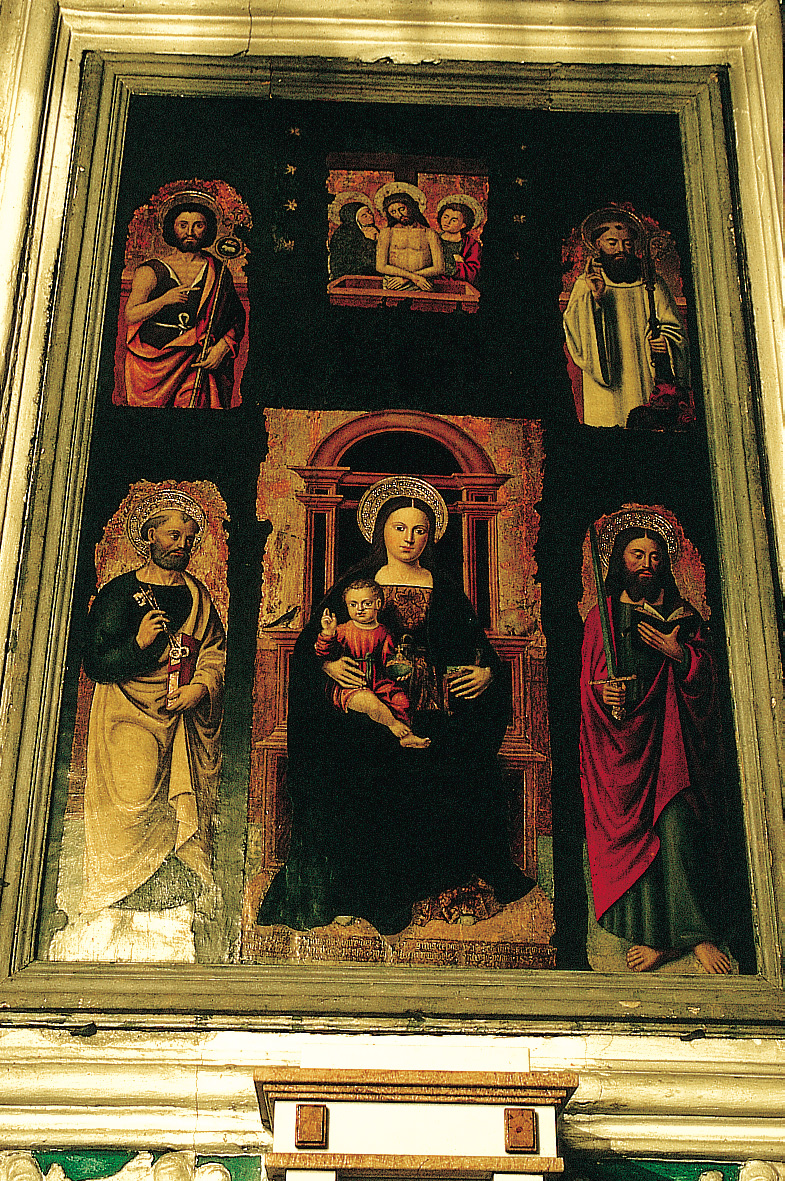
The church was rebuilt in Baroque style in 1729; inside it preserves the suggestive polyptych "Madonna and Saints Peter and Paul" by Agostino Casanova and Stefano Adrechi of 1523.
Immediately upstream of the church is the oratory of Santa Croce whose facade, framed between two columns belonging to the old church, has a monolithic architrave dated 1656; from there, going up the ramp above the fountain and first turning left, then right and then right again, you can reach the small baroque chapel of San Michele in three hundred meters of country path.
The painted doors are remarkable. They are many and very beautiful, some even by well-known painters.
Returning to the car go back to the Provincial Road, cross Molini again and at the crossroads turn right, observing on the left the mills which gave the town its name and which were the place where the wheat was ground with very hard stone-wheels brought from Brussels; on the right is the two-arched medieval bridge.
A few kilometers further you’ll reach Dolcedo.