
Altitude: 5 m a.s.l.
Area: 4 sq km
Distance from Imperia: 43 km
Inhabitants: in 1881: 2183 - in 2017: 6970
Patron Saint Day: August 16th - San Rocco
Information: Municipality phone 0184 25521
Visit of the town
Back to the car continue down the valley until you encounter Vallecrosia, which you’ll access by crossing the bridge on the left; parked the car at the widening, pass the double wash-house hosted by the vault that supports the churchyard above, going up the ramp on the left (Via Soprana) which leads you to the eighteenth-century church of Sant'Antonio, with statues of saints on the facade.
Continue on the left along Via Soprana, passing on the right, at the first arch, the bulge in the wall supported by shelves that houses the fireplace of the house; at the end of the street go left and after a few steps towards the fountain raise your eyes to the building on your right.
It is a defensive tower from the Barbarian-Turks, very disfigured by the transformation into a dwelling, which preserves at the top the stone shelves on which the machicolations rested and on the sides the quadrangular slits.
Passing under the vault next to the tower you’ll soon reach the eighteenth-century church of Assunta, with the triangular bell tower typical of the valley, and brick seats in the small semicircular opening that faces it.
From there go back following the brick flooring; after the intersection with Via Grossi, take the left and after passing the window-doors at number 78 and at number 72 you’ll arrive to Piazza Verdi, with beautiful stone seats on the sides.
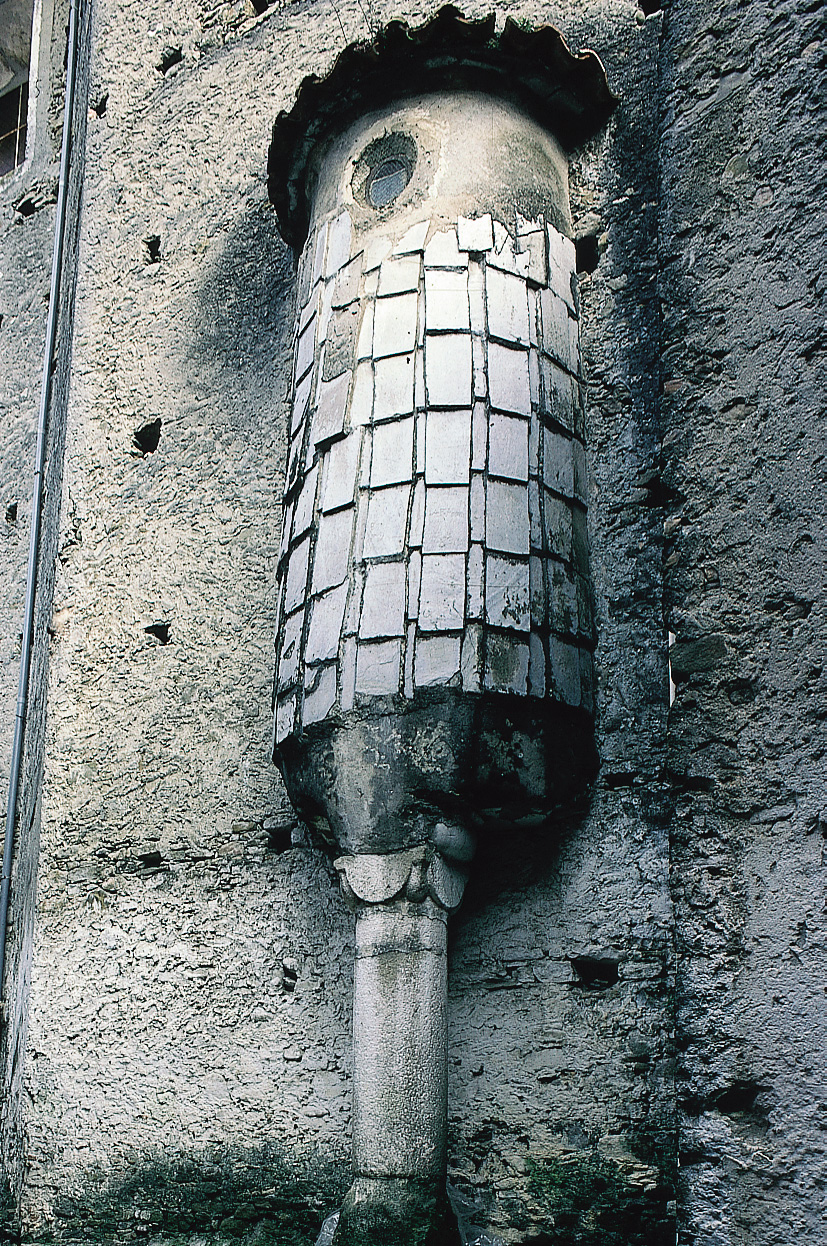
Go under the high arch on the right, then left and then right again on Via Chiesetta, passing along the right side of the church with a Doric capital column supporting the bulge of the internal chapel covered with "ciappe" from which you can return to the car.
After about three hundred meters of Provincial Road, at the other bridge you can see in the middle of the fields to your left another defense tower from the Barbarian-Turks, now used as a dwelling.
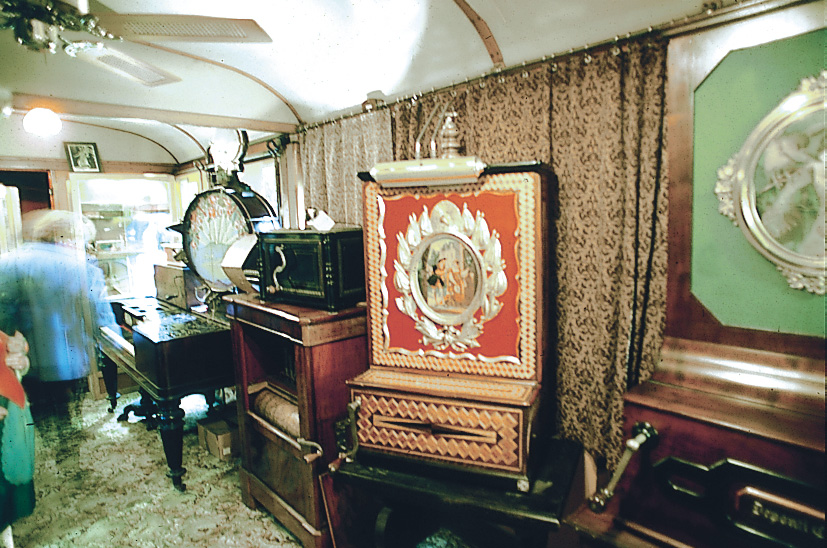
Continuing by car you’ll arrive after about a kilometer to the "Tempio-Museo della canzone" (Temple-Museum of the song), realized by the singer Erio Tripodi during a whole life of passionate work of collecting instruments for sound reproduction; from there in less than four kilometers the Provincial Road brings you back to Via Aurelia.
Continuing along the Provincial Road towards the sea, you’ll reach Piani di Vallecrosia, the municipal seat since the 1920s.
With the arrival of the railway at the end of the nineteenth century and with the development of floriculture, the flat area, equipped with a railway station, became an important hub for the sale and shipment of flowers.
A flower market was then built, first in the open air near the train station, later equipped with a roof, and finally a large reinforced concrete structure, and gradually the Roman-plan settlement grew on the main axis of the Via Aurelia.
In antiquity, first due to the unhealthiness of the marshlands, not profitable for agriculture, later because of the barbarian and Saracen invasions, finally for the Turkish-Barbarian raids, the plain of Vallecrosia has always been scarcely inhabited if not for a nucleus developed near the sixteenth-century tower now included in the garden of the "Sant'Anna" religious institute.
There was also the small church of San Rocco, a recently renovated religious building, built directly above a Roman temple dedicated to Apollo on the route of the ancient Via Julia Augusta.
In the second half of the nineteenth century, various religious communities began to develop in Piani di Vallecrosia. The first ones were the Waldensians, already present in the territory for centuries, which in 1866 inaugurated a first free school and founded an institute with boarding school, now called "Casa Valdese per la gioventù evangelica" (Waldensian house for evangelical youth).
In 1876 even San Giovanni Bosco arrived to Piani di Vallecrosia and committed himself to set up near the tower a Salesian Institute with a Church, now the Sanctuary of Maria Ausiliatrice, with male and female schools, later transformed into two separate institutes governed by the Salesian Fathers and the Daughters of Maria Ausiliatrice, with a cinema, a theater, computer rooms, sports fields and a gym.
In front of the Salesian Work in 1903 the Sisters of San Martino di Digne founded the Sant'Anna Institute, which later became a boarding school equipped with a theater.
The last religious order to arrive to Vallecrosia were the Somaschi Fathers in 1962: they settled in Villa Poggio Ponente on Via Romana and installed a pedagogical community for young people with behavioral and school problems.
In the late 50s and 60s of the last century the urban layout developed considerably with the construction of dozens of tall buildings and the inhabitants grew steadily until the early 1980s.
Vallecrosia today has a resident population of about 6,800 people who, together with that of Vallecrosia Alta, make the town reach nearly 7,300 inhabitants; moreover there are more than a thousand second homes, above all homes of tourists from Northern Italy.
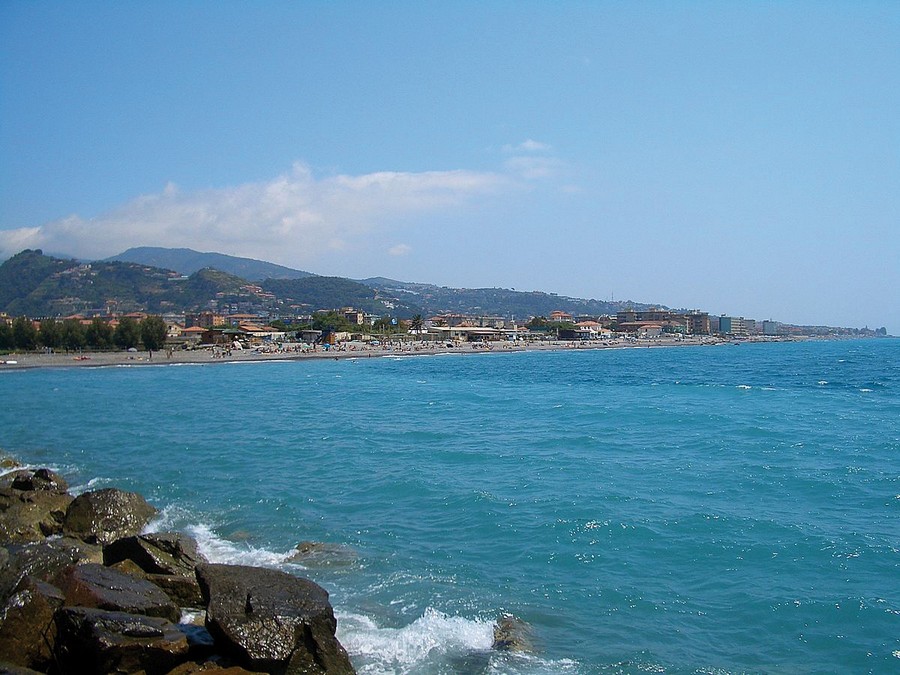
The town has a kilometer of coastline with beautiful and wide public beaches served by five bathing establishments.
Vallecrosia is a commercial tourism reality still tied to floriculture, especially succulent plants and orchids, and today it is located in the center of an area with an extensive cycle-pedestrian promenade, from the Port of Ventimiglia to that of Bordighera, and is a town especially aimed at the needs of families and well served by services and means of communication.
After these considerations, go up the valley in the direction of Soldano and stop in San Biagio della Cima.